Saturday, 29 June 2013

No Matter How Bad the Dreams Get, When I Wake Up It's Always Worse


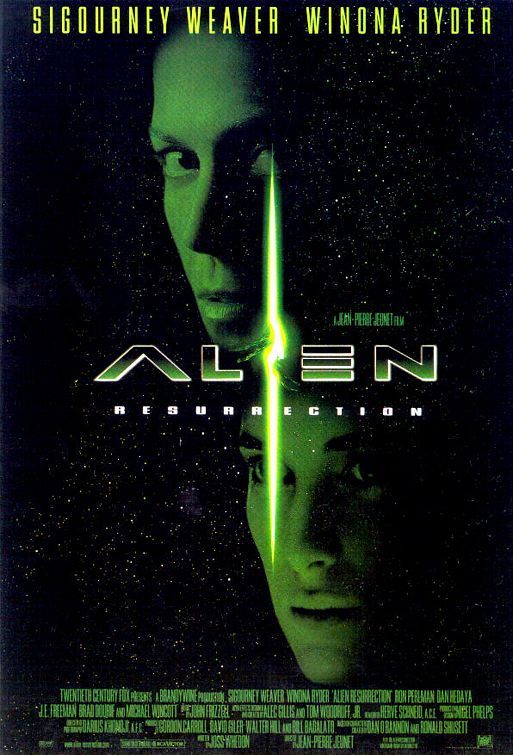
“My mommy always said there were no monsters -- no real ones -- but there are.” When Newt speaks those words in Aliens, she is a young girl who has been confronted with horrors the likes of which euphemisms can’t describe. When Ripley speaks the same words in Alien: Resurrection, it is as an alien-human hybrid, forced to confront the monstrosity in both her creators and herself. In the latter case, I’m inclined to believe that Ripley is also talking about the film itself.

If Alien: Resurrection took corporeal form, it would be the kind of creature you wouldn’t want to find lurking in your bed or hiding in your closet. Just ask its screenwriter, Joss Whedon; it’s been hovering over him for years. Back in 2005, eight years after the film’s release, Whedon claimed that the script became a monstrosity only after it left his hands:
“It wasn’t a question of doing everything differently, though they changed the ending, it was mostly a matter of doing everything wrong. They said the lines... mostly... but they said them all wrong. And they cast it wrong. And they designed it wrong. And they scored it wrong. They did everything wrong that they could possibly do. ...It wasn’t so much that they’d changed the script; it’s that they just executed it in such a ghastly fashion as to render it almost unwatchable.”
As recently as April of this year, Whedon is still answering for the film that, if it were a person, would be old enough to get a driver’s license:
“When you are making a movie you are making something that is going to last forever, especially now with the internet. So there is always going to be a shitty Alien movie out there. A shitty Alien movie with my name on it.”
Alien: Resurrection displays Frankenstein’s monster levels of doggedness in pursuing its creator.
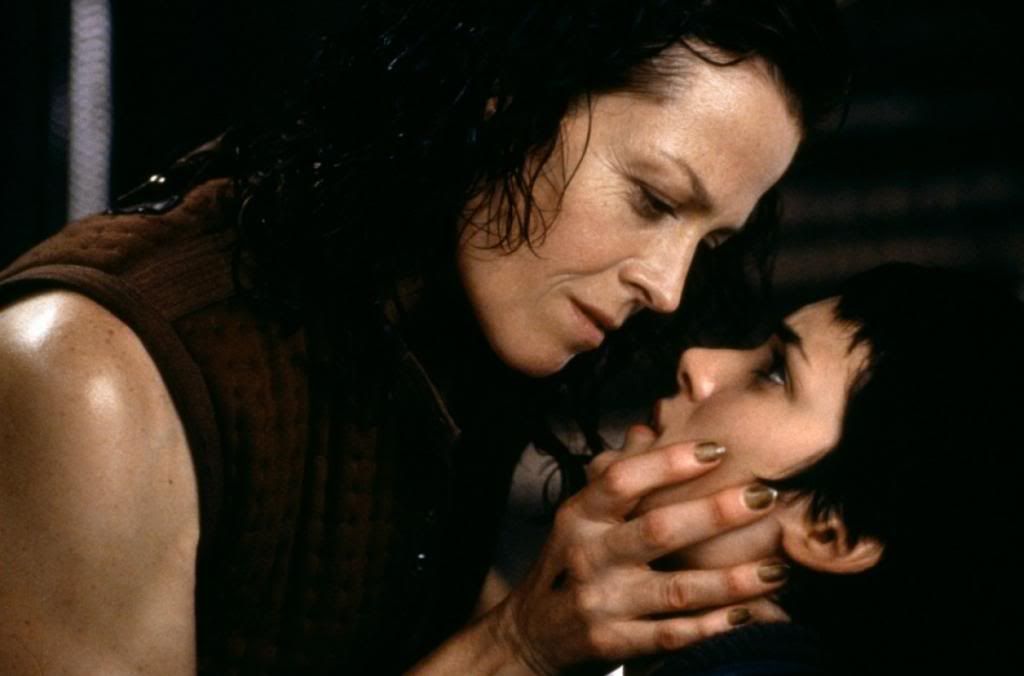
And so it should, because it is a mess. The film begins with Ripley speaking those loaded words as we see her body floating in a tube, growing from child to adult. It turns out that she is on the USM Auriga, a medical research vessel where a group of ethically challenged scientists have been attempting to clone Ellen Ripley, in order to replicate the alien queen she died to destroy. They find success on their eighth attempt, and they decide to let Ripley 8 live, conducting a series of tests which show not only that she is a fully-functioning adult, but that she has retained some of the original Ripley’s memories. This turns out to be helpful when the aliens predictably turn against the scientists who sought to tame them, and the time comes for Ripley to take out the aliens for good (for the third time).

The first thing to get out of the way in this analysis is the fact that Ripley 8 is not Ellen Ripley, and I will admit that I consider this one of the great flaws of the film. The original Ripley survived almost entirely thanks to her wits, so it is difficult to see her become one in a long line of Whedon’s dark-haired, damaged, ass-kicking superwomen in a box (or tank, as is the case here). Ripley established herself as a hero without the benefit of powers, but the creative team behind this film clearly thought that that wasn’t cool enough. Instead of allowing her to remain a shining example of unaltered humanity, they beefed up her power set. The new and ostensibly improved Ripley has super strength, acid blood, a lightning quick healing factor, and a “highly evolved instinct,” all of which she acquired as a result of the cloning process combining her DNA with that of the alien queen.

Now, I love superheroes as much as -- and probably more than -- the next person, but many of my favourite heroes are the Badass Normals. There is something incredibly appealing about a person who struggles to save the world without the security of invulnerability or superspeed, about a fragile human who risks their life to save people like them, not because great power demands great responsibility, but because the right thing to do is the right thing to do. This is the appeal of Ellen Ripley, a woman who was third in command on a mining ship, but nevertheless stood up to the military, the uncaring capitalist machine, a group of dangerous criminals, and an alien threat that could eradicate human life. Giving her superpowers makes it seem like she needs superpowers, and anyone who’s seen the first two films knows that isn’t true.

The objectification that forms an important part of the cloning plot further complicates the film’s treatment of new Ripley. We first see Ripley 8 as naked, slumbering specimen, surrounded by four scientists who are observing her. She is an object of scientific study, referred to by one of the major scientists as “it” as he coolly explains her memory loss -- likely incurred as a result of her traumatic situation as “connective difficulties caused by a biochemical imbalance causing emotional autism.” General Perez talks about “putting her down” and calls her a “meat by-product” of their quest to remake the queen. Even Annalee Call, who comes to respect Ripley, initially tells her, “You’re a thing, a construct. They grew you in a fucking lab!” Admittedly, this is a bit rich coming from Call, who is herself revealed to be an android designed by androids: a thing made by other things.

As the film progresses, the question of Ripley’s nature becomes less a matter of thing versus person than of alien versus human. A pivotal moment occurs when Ripley 8 is confronted with a room full of failed clones, all of which are horrific combinations of human and Xenomorph physiognomy. Ripley 8 is appalled by the collection, and responds to the seventh clone’s request for death by burning down everything in the room. Immediately afterwards, she threatens one of the scientists with her flamethrower, turning her anger on the representative of the people who created her. Call talks her down, denying her the opportunity to punish those responsible for the Ripleys’ suffering. After this scene, which ends with a particularly awful moment in which a man dismisses her actions as a waste of ammo caused by “a chick thing,” Ripley has ample reason to hate the humans.

Despite this, she retains some recollection of the original Ripley’s devotion to humanity, and she tries to understand it. In order to do this, she turns to another somewhat human person, Call, and asks her why she cares what happens to the humans. Call tells her that she is programmed to do so, and Ripley replies, “You’re programmed to be an asshole?” It’s a strange connection to make; how does caring about people make someone an asshole? Is this an attempt to show the difference between Ripley 8 and the original, who cared deeply about people as individuals and as a group? It may be, but it could also tell us that Ripley 8 is finding it difficult to cope with the failure that seemed to accompany her original’s every success. Ripley explains that she once understood how it felt not to be able to let humans destroy themselves: “I tried to save... people. It didn’t work out. There was this girl. She had bad dreams. I tried to help her. She died. Now I can’t even remember her name.” She tells Call about the effects of her original’s experiences: “When I sleep, I dream about them. It. Every night. All around me, in me. I used to be afraid to dream, but not anymore. … Because no matter how bad the dreams get, when I wake up it’s always worse.” Caring about people doesn’t necessarily make someone an asshole, but the miserable existence that Ripley 8 associates with caring about people might.

Unfortunately, her life doesn’t get much better following this discussion. Just when we learn that she is still trying to cope with the death of her adopted daughter, the alien queen she sort of gave birth to demands her attention. Ripley is called into the aliens’ nest, where the queen is giving birth, thanks to a human reproductive system she developed as a result of the hybridization that occurred during the cloning process. From her womb emerges the Newborn, a more fully realized alien-human hybrid, who immediately kills her and adopts Ripley as its new mother. It clearly feels betrayed when Ripley nevertheless causes it to be sucked out, piece by piece, into the vacuum of space.

I initially intended to analyze these final scenes as a continuation of the series’ treatment of motherhood, but nothing in these scenes really tells us anything new about Ripley, except, perhaps, that this version of her is willing to choose the human race over a creature that isn’t really her child. Sure, she’s genuinely sorrowful and apologetic, but she’s still getting rid of the alien threat, securing the cradle of human civilization just before the Xenomorphs can reach it.

Except she doesn’t actually save Earth, because there’s no Earth left to save. Technically, the planet still exists, but the people she spent four movies protecting are already gone. Earth appears to have been abandoned for decades.

Throughout the series, Ripley has two goals: destroy the Xenomorphs and go home to Earth. In Alien: Resurrection, she finally achieves both of these goals, but what should be a happy ending is ultimately a betrayal of the series. Ripley wanted to eradicate the aliens in order to prevent them from getting back to Earth and wiping out humanity; though she suffered tremendously, she knew it was worth it to keep people safe. However, when she arrives on Earth, it seems that humans have done a fine job of destroying it all on their own. Despite her efforts, the planet she gave her life to protect is still in shambles. Strengthening the blow is Ripley’s final line: “I’m a stranger here myself.” By having Ripley remind us that, as a clone, she has never actually stepped foot on Earth, the film cheapens its hero’s triumphant return. She does not go home; instead, she emerges into a new kind of strange alien landscape. She doesn’t lose, but she certainly doesn’t win.

In the interest of staying on topic, I’ve left out many of the the truly monstrous aspects of Alien: Resurrection: its often hammy acting, its awkward dialogue, and its parodic disregard for earlier instalments in the series, including the random replacement of MU-TH-UR with FA-TH-UR and the announcement that the omnipotent corporation, Weyland-Yutani, had been bought out by Walmart. It is a confused movie, a parody of the Alien films that nevertheless sees itself as the final part of the series, like a terrible version of Galaxy Quest whose creators intended it to be a proper Star Trek sequel. It’s the kind of monster you’d consider keeping under your bed, if only to keep it away from your television screen.

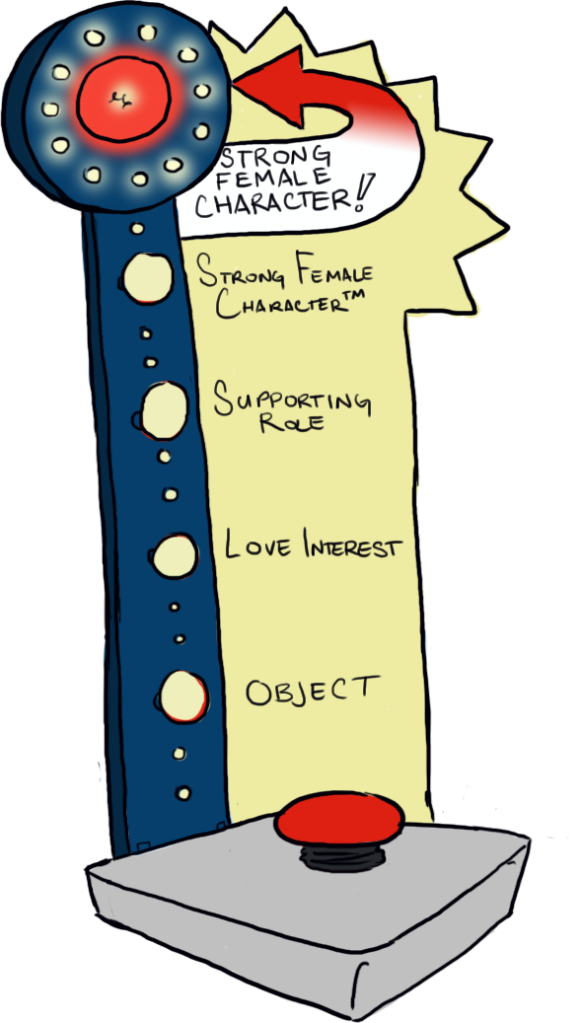
Verdict: Strong Female Character™. I’m not giving full credit to a version of Ripley that the original character would detest.


Monday, 24 June 2013

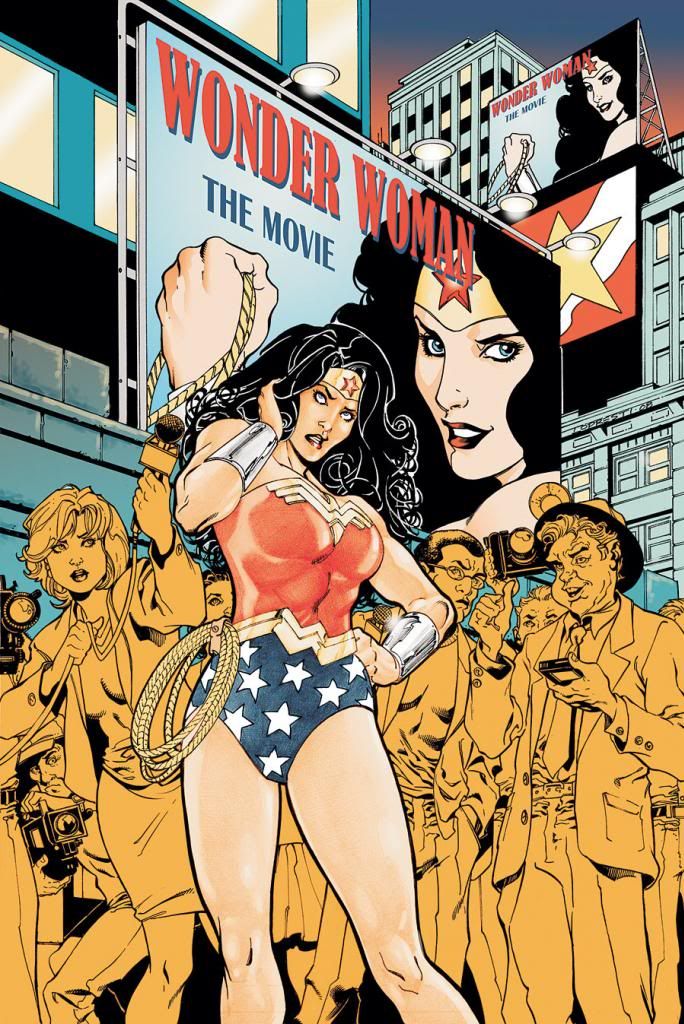
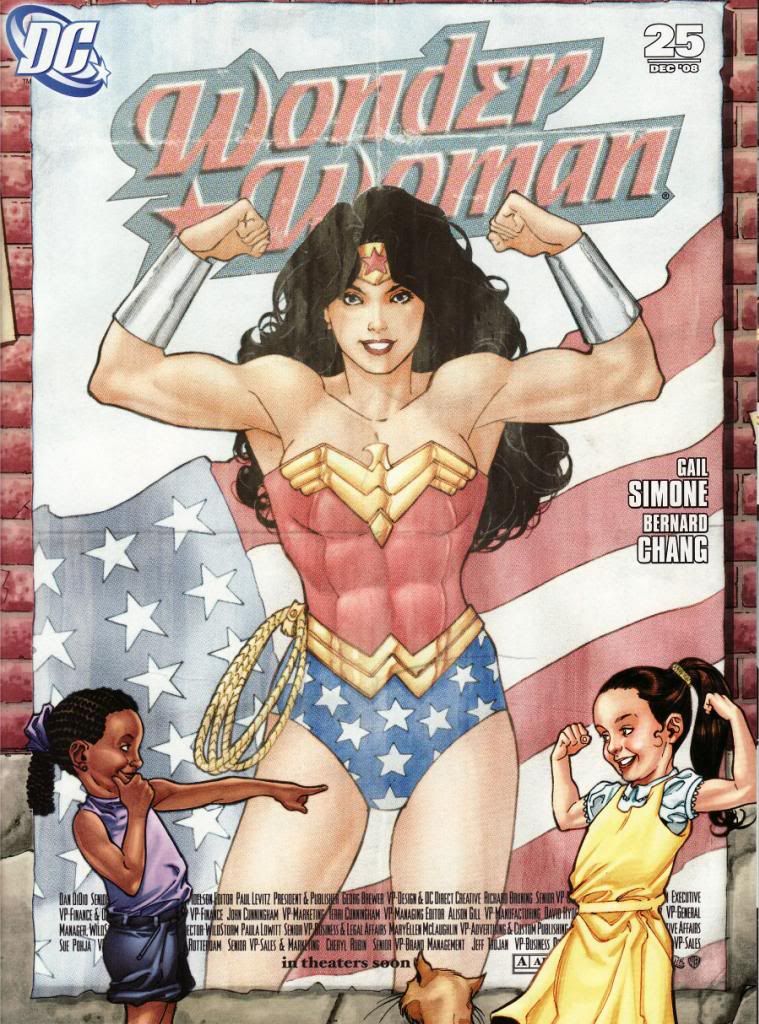
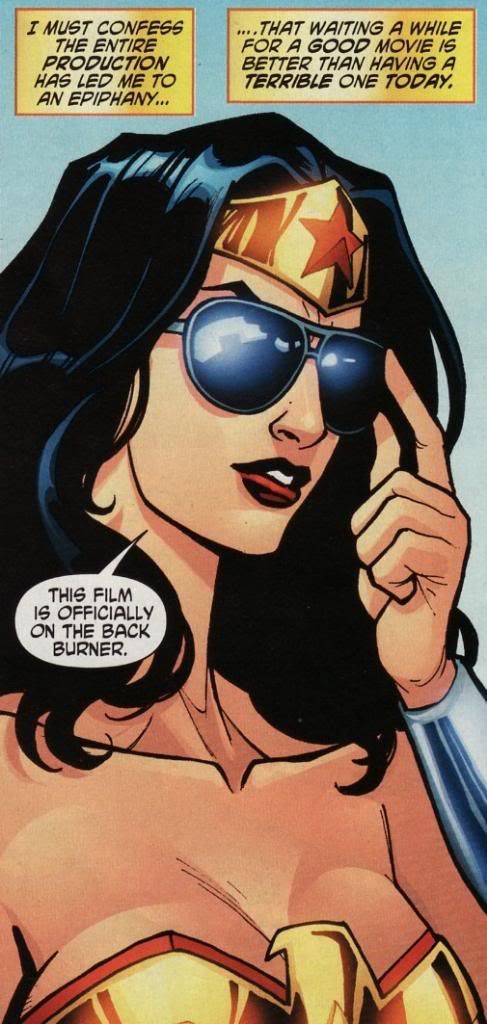
Why We Don’t Need a Wonder Woman Movie (Yet)

Aaron Lopresti and Hi-Fi

(Note: Contains spoilers for Man of Steel and the Dark Knight trilogy.)

Every time a new superhero film comes out, someone will inevitably publish an article asking why a live-action Wonder Woman film has never been made. With the recent release of Man of Steel, this question has again been raised, and this time, some vague answers have actually been given.

For the most part, these answers have been as promising as vague, noncommittal, unofficial assurances can be. David S. Goyer, the screenwriter responsible for Man of Steel and all three of Christopher Nolan’s Batman films, was recently asked about rounding out his portfolio with the third member of DC’s Trinity: “I think Wonder Woman is a very difficult character to crack. More difficult than Superman, who is also more difficult than Batman. Also, a lot of people in Hollywood believe that it’s hard to do a big action movie with a female lead. I happen to disagree with that. But that tends to be the prevailing wisdom. Hopefully that’ll change in the next few years.” A few days ago, The Wrap reported that Warner Bros. is planning to make Wonder Woman the focus of a film following the release of the fabled Justice League movie. There is also further evidence of the studio’s interest in getting a Wonder Woman-focused project off the ground in their repeated attempts to make the character work in a television show. While the 2011 attempt proved disastrous, plans are still in the works to prepare a series for the CW, whose president, Mark Pedowitz, has stated, “We do not want to produce something that doesn’t work for that particular character -- it is the trickiest of all the DC characters to get done.”

That’s precisely the problem: it’s hard to get Wonder Woman right, particularly when there are hundreds of millions of dollars on the line. My solution? Don’t try.

Aaron Lopresti
This may seem like a shocking assertion to be made by a comics fan who runs a blog all about strong female characters. By all rights, I should be the first person in line for a Wonder Woman film, bracers on my forearms and the double W emblazoned on my chest. And I will be, when the right time comes, but now is not that time. (Neither is 2017, which is the earliest we can hope to see the film released.) In fact, while this may be a good time for Diana of Themyscira to take another crack at television, it is the worst possible time for her to break into the Man’s World that is mainstream Hollywood cinema.

Before you pelt me with fruit and force me to perform my own version of bullets and bracelets, let me explain.

Reason #1: This is not the creative team we are looking for.

Christopher Nolan, the director of the Dark Knight trilogy and producer of Man of Steel, makes dark, overly realistic superhero films with fairly flat, lacklustre female characters. He’s all about the male “lonely god” figure. Wonder Woman, by contrast, is both a complex woman and a character of community.

Zack Snyder, who directed Superman’s latest foray, previously made Watchmen, which suffered from being an almost too accurate adaptation. He made up for that dedication to getting things right by getting Superman all wrong, namely by advocating for Kal-El to murder Zod, despite the fact that this goes against everything that the character stands for. Snyder also wrote and directed Sucker Punch, which is enough reason to keep him far, far away from Diana.

As the writer of all four of the aforementioned Batman and Superman films, David S. Goyer is both clearly not the person we want to write the Wonder Woman movie, and the person who will ultimately get tapped for the job (if it doesn’t go to the writers of the Green Lantern movie that flopped). This is beyond concerning, considering the fact that Goyer said himself that Wonder Woman is more difficult to write than Superman. Keep in mind that Goyer gave us a Superman who snaps his enemies’ necks, willingly fights said enemies in densely populated areas with no concern for the humans he purports to want to save, and, perhaps worst of all, doesn’t engage in witty, sarcastic banter with Lois Lane (who knows his identity almost from the outset). It was bad enough when Goyer and Nolan ignored decades of sidekicks to make Batman the hero who works alone, but completely disregarding fundamental aspects of Superman’s character is unforgivable.

If this is what they do to Superman, imagine what they would do to Wonder Woman, who snapped a man’s neck in the same issue where she was punched from outer space to Earth, and prayed not for her own safety, but for a landing that caused no human casualties. The complexities of her character would be lost on a creative team that fails to grasp even the basics of the Big Blue Boy Scout.

Reason #2: A failure will put female superhero films on hold for years, if not decades.

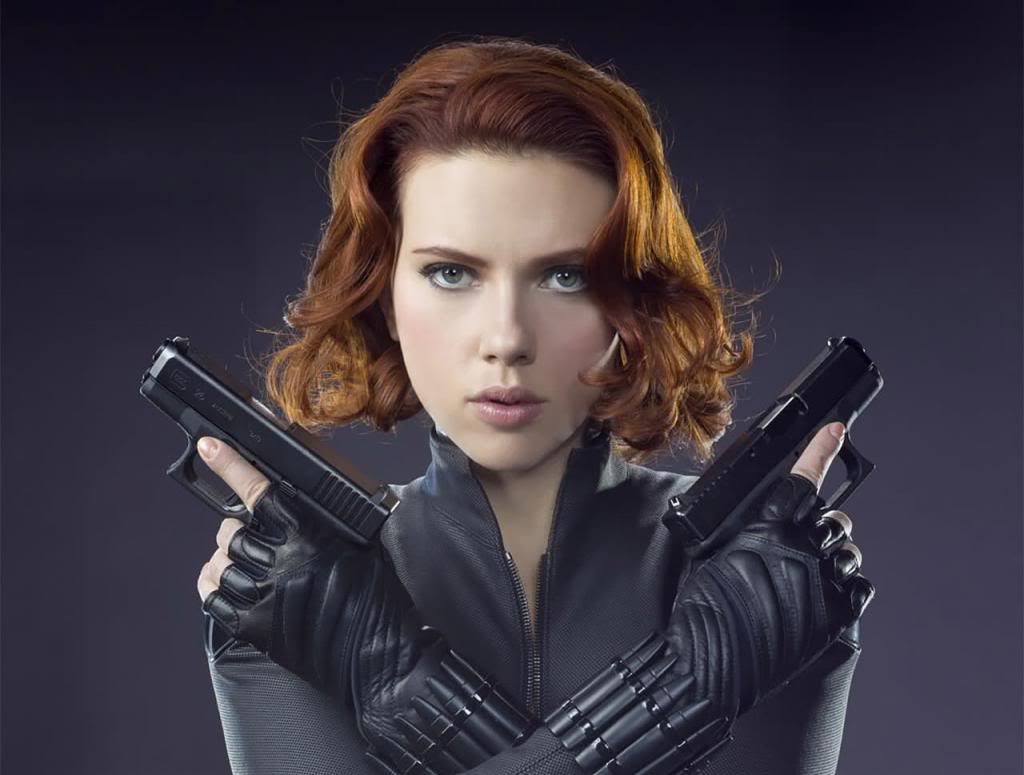
If you go to a multiplex this summer, you will see ample evidence that Hollywood doesn’t need an excuse not to make a film about women. Consider the fact that, following the release of The Avengers and the near universal praise of the Black Widow character, Marvel and Disney decided to make sequels to all of their male superhero franchises, as well as a Guardians of the Galaxy film, instead of going with the more obvious choice of What Happened in Budapest Or, Why Natasha Romanoff is More Compelling Than Yet Another White Dude. Because of a (very short) string of terrible woman-led superhero movies, including Catwoman and Elektra (nine and ten percent on Rotten Tomatoes, respectively), we need an unqualified hit to show that superheroic women can sell tickets, and a stand-out in an ensemble film apparently isn’t enough.

What complicates the situation further is the fact that Wonder Woman is the female superhero. When you ask a person who doesn’t read comics to name a woman superhero, Diana’s is likely the first name that will come up. She’s just about the only woman familiar to the masses whose alter ego isn’t a riff on a previously established male hero. She’s the one woman who has to be on the Justice League roster for the general audience to consider it complete. Because of this, she is also the greatest risk.

If a poorly made film featuring a minor female superhero is a box office flop, Hollywood executives will claim that audiences don’t want to see women donning capes and tights and fighting crime. We will know better, and dozens of articles will be written explaining the real reasons behind the failure. Eventually, someone might try again. However, if a Wonder Woman movie fails, especially one made by the current “dream team,” executives will have a more legitimate reason to shy away from super-powered ladies. If even the biggest name can’t draw in the crowds, why try?

It’s not terribly sound logic, but it’s the logic that will likely be applied.

Solution

I had initially planned to provide more reasons, but it really does boil down to those two: a failure to do Wonder Woman well would have disastrous results, and the creative team most likely to be assigned the job seems to lack the capacity to do the character well.

Kano and Stefano Gaudiano
This brings me to my proposed solution: DC/Warner Bros. and Marvel/Disney should make a bunch of superhero movies starring women, using creative teams that know, love, and understand the characters. If the studios are concerned that they won’t make enough money, they should make the first few films with smaller budgets and let the audience prove that they are willing to pay. In the age of Kickstarter and the Facebook campaign to get people to see Bridesmaids, we are well aware that our dollars act as votes in favour of the production of similar content. If enough of us pay to see movies about female superheroes and let executives know that we saw those movies specifically for those women, we make making those films worth their while.

I also think that the studios should capitalize on the franchises they already have, not by adding sequels starring Yet Another Straight White Guy, but by fleshing out the universe. Marvel has already grasped this idea, and DC should follow their lead. Christopher Nolan is done with Batman, but that doesn’t mean that his Gotham can’t be used to tell the stories of people like Helena Bertinelli or Cass Cain. The presence of an already established Commissioner Gordon gives Warner Bros. the opportunity to create two new franchises: Batgirl and Gotham Central.

Although The Dark Knight suggests that Gordon’s son was more profoundly affected by the family’s encounter with Batman, it wouldn’t take much to show how the same event influenced his daughter, Barbara, the Gordon offspring we already know and love. In a film trilogy, we could follow her from the beginning of her career as Batgirl, through the shooting that left her partially paralyzed, and finish with the establishment of the Birds of Prey.

Like Agents of S.H.I.E.L.D., Gotham Central would be a television spin-off of a successful franchise. The series could take place just after the events of The Dark Knight Rises, when Batman’s sudden absence drives the GCPD to shift the Major Crime Unit’s focus exclusively to the criminal activities of the Caped Crusader’s rogues gallery. We would see Robin finding his footing from the perspective of the officers who knew his predecessor, and we would watch Renee Montoya’s development from a police officer to a superhero over the course of the show.

Bernard Chang
My last suggestion is to tell diverse stories in order to attract diverse audiences. An indie-style film about Batwoman -- a gay, Jewish former West Point cadet kicked out under DADT -- would sell very well, and it wouldn’t require the entire population of the United States to see it to make money. The Marvel comic, Runaways, featuring a teenaged cast full of racial and sexual diversity -- not to mention four girls in its original line-up -- was on its way to being made a few years ago, and it’s time for it to get the Hollywood treatment (sans the usual whitewashing and fetishization of queerness). A white, male, cisgender, heterosexual hero may have a whole host of abilities, but he doesn’t have the power to satisfy every kind of viewer.

So, no, I don’t think we need a Wonder Woman movie yet. I think that we need to prove to the Hollywood money-making machine that people want to see women saving the world while wearing slightly ridiculous outfits. I think we need to show every naysayer that women are capable of being more than love interests who play second fiddle to their saviour boyfriends. And then, when we have proven that women are every bit as heroic as men, that’s when we make Wonder Woman, because that’s when we’ll be ready to tell her story right.

Friday, 21 June 2013

You've Been in My Life So Long, I Can't Remember Anything Else


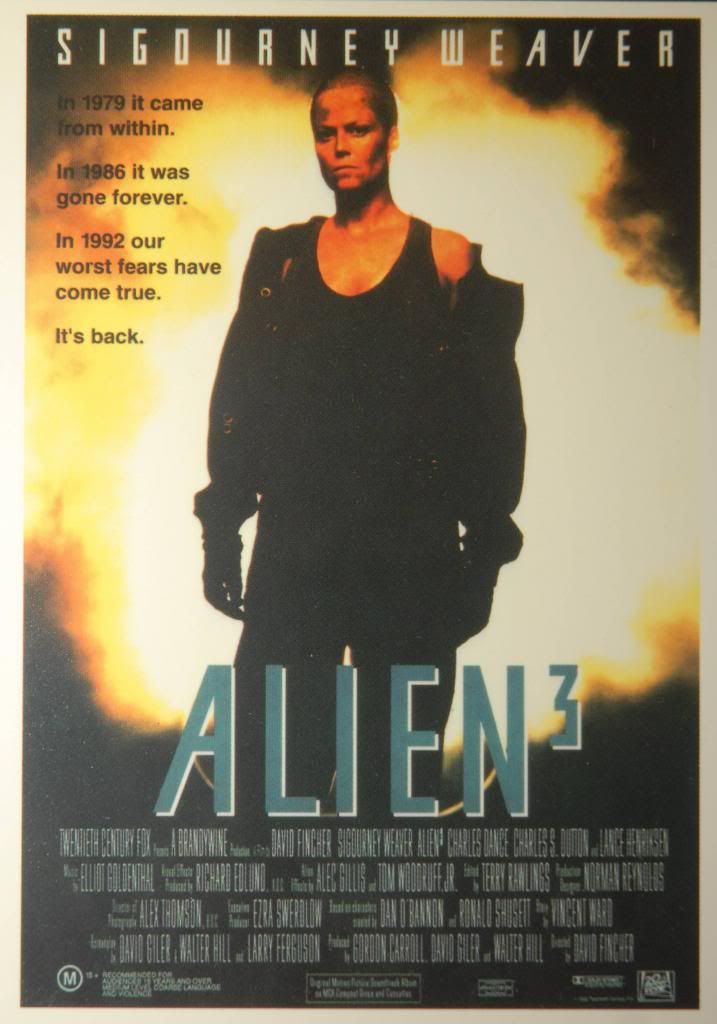
(Note: For this analysis, I will be referring to the 2003 Special Edition of Alien3, written hereafter as Alien 3, because it’s clearly not intended to be Alien Cubed. Then again, it was 1992...)

(Trigger warning: discussion of attempted rape)

Hollywood loves franchises. This summer alone, there is a prequel to Monsters, Inc., a re-imagining of the Superman mythos, and the sixth installment in the Fast and the Furious series. Some series -- such as Richard Linklater’s trilogy of Before Sunrise, Before Sunset, and the recently released Before Midnight -- may go almost a decade without a new film, but most modern franchises operate with very short turnaround times. The Lord of the Rings trilogy was released in annual installments, and Harry Potter never went more than two years without making an appearance at the theatre. Even the Dark Knight trilogy only took seven years.

So a franchise like the Alien series -- written and directed by different creators for each film, transforming from a horror into an action flick into an existential thriller into a parody of itself -- seems a bit strange to the modern viewer. There are only two things that tie the four together and, in turn, become increasingly tied together: Xenomorphs and Ripley.

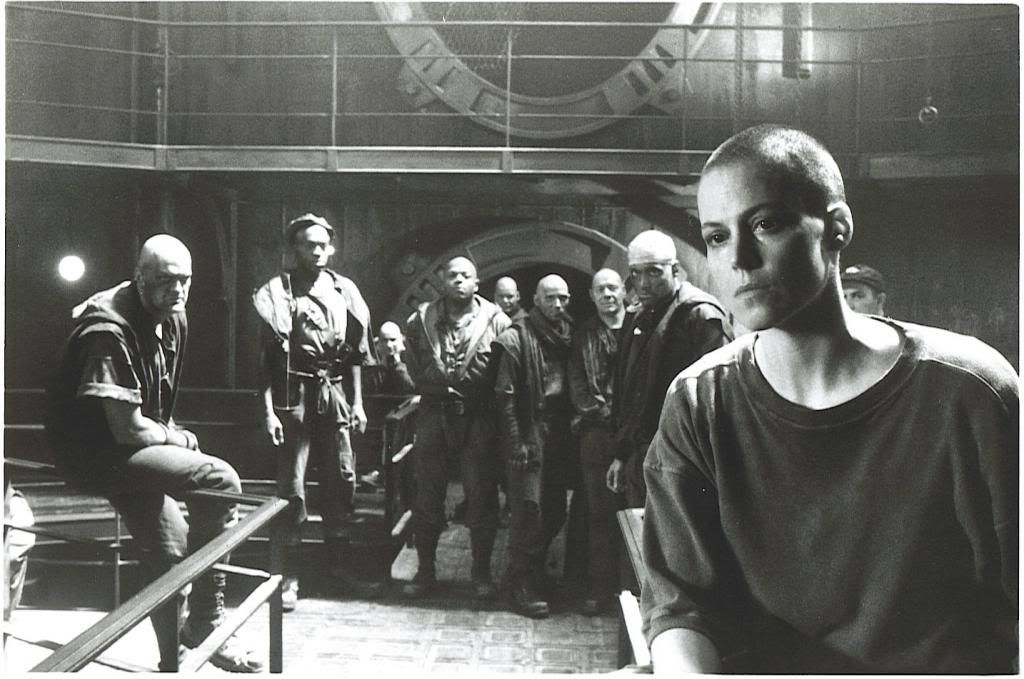
Alien 3 begins with the crash landing of the Sulaco on the prison planet, Fiorina “Fury” 161, caused by a fire that may have been produced by alien activity. Once again, Ripley is the sole survivor, making all of her efforts to save Hicks and Newt completely meaningless; it’s a cheery place to start a film. Things only get worse when Ripley learns that the prisoners are a bunch of double Y chromosome men who were put away for a number of violent crimes, including rape, murder, and child molestation. Having found God (and lost women) in exile, they view Ripley as a kind of temptation. Kept in an infirmary “for her own protection,” Ripley grieves her lost companions as the alien threat once again closes in.

As always, before she can defeat the aliens, Ripley must first confront a human enemy. In this film, that enemy is almost everyone, including our old favourites, the Company and the male-dominated chain of command. The latter is represented primarily by the prison superintendent, who orders Ripley’s imprisonment in the infirmary. He is incredibly condescending, saying things like “That’s a good girl” and “Get that foolish woman back to the infirmary.” Luckily, the narrative’s intolerance for the underestimation of Ripley kicks in, and he is dragged away by an alien immediately after uttering the second line. Unlike the earlier films, where Ripley is stymied again and again by men in power, Alien 3 very quickly weakens and eliminates male authority.

At the same time, however, it strengthens the men themselves; the film’s emphasis on the men’s double Y chromosome appears to exist primarily to emphasize their maleness. Whereas Ripley once fought figurative battles against the male heroic archetype, the sexual objectification of women, and the male-dominated power structure of the capitalist machine, here she fights the men themselves. For these men, who haven’t seen a woman in years, she initially represents both the apple and the serpent, both the forbidden fruit and the voice that urges them to consume it. This is not because Ripley encourages their attention in any way, but merely because she exists in close proximity to them. When the superintendent orders her to remain in the infirmary, he explains that he doesn’t wants a woman walking around, “giving them ideas.” Before a crime has even been committed, the prison’s inhabitants are in full victim-blaming mode.

It should come as no surprise, then, that Ripley is sexually assaulted and almost raped. While she gathers up the remnants of Bishop, she is ambushed by a group of inmates who bend her over a railing, cut her clothing, and prepare to enact an almost ritualized rape. Before they are able to follow through, however, another inmate, Dillon, attacks them. He continues to beat on them, claiming that he needs to “re-educate some of the brothers.” While he does that, Ripley punches one of them in the face.

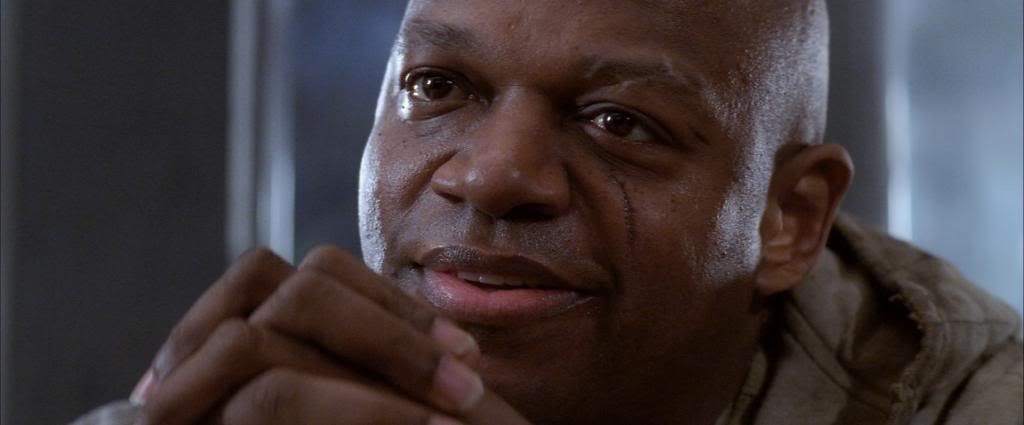
There’s a lot to say about this scene. First, there is the matter of the rescue. Dillon introduces himself to Ripley as “a murderer and rapist of women,” but we’re supposed to sympathize with him because he’s reformed, and because he pummels attempted rapists. Regardless of what you believe about the rehabilitation of sex offenders and murderers, it says a lot about a film when it expects us to side with such a character. It is especially disturbing because the narrative clearly places Dillon in the deuteragonist role; he is nearly as intelligent and heroic as Ripley. It is Dillon who gives the stirring speeches to rouse the men to the fight against the Xenomorph. It is Dillon who refuses to kill Ripley when she asks, instead telling her that he will kill her after the alien dies, because he knows that leaving even one alien alive would have disastrous consequences. He sacrifices himself so that she can complete this very task. He dies to protect the human race, so a little rape and murder can be forgiven, right? It’s troubling.

Also troubling is that fact that Dillon is the one who gets revenge on Ripley’s would-be rapists, while she gets only a single punch to make an attempt to re-claim her agency, and she doesn’t even get to punch the man who was going to rape her first. Later, the same man that she punched, Morse, helps her to evade Weyland-Yutani’s clutches, so, again, all appears to be forgiven.

I’m not saying that the film condones the men’s overtly sexist behaviour. In one scene, two inmates discuss their plans to approach her, which includes such gems as “I’d be happy to kiss her ass; I’d be happy to kiss it any way she wants,” “Treat ‘em mean, keep ‘em keen,” and “Treat a queen like a whore and a whore like a queen.” Because they are carrying around a dead, insect-covered animal, we can be fairly certain that we are meant to interpret their words as disgusting and vile. Still, when the film only condemns men as overtly misogynistic as this, and expects us to support characters like Dillon and, to a lesser extent, Morse, it becomes problematic.

It also prompts us to ask an important question: Why is it necessary to include an attempted rape scene in a film about a heroic female character? Having defeated a whole colony of aliens, is Ripley too strong, too invulnerable? Does Ripley have to be “brought down a peg”? Is the loss of her two friends and her adopted daughter not sufficiently awful, so she needs to have her own body violated? Or is the attempted rape merely a device to get us to accept a male rapist and murderer as Ripley’s co-hero, simply because he saved her?

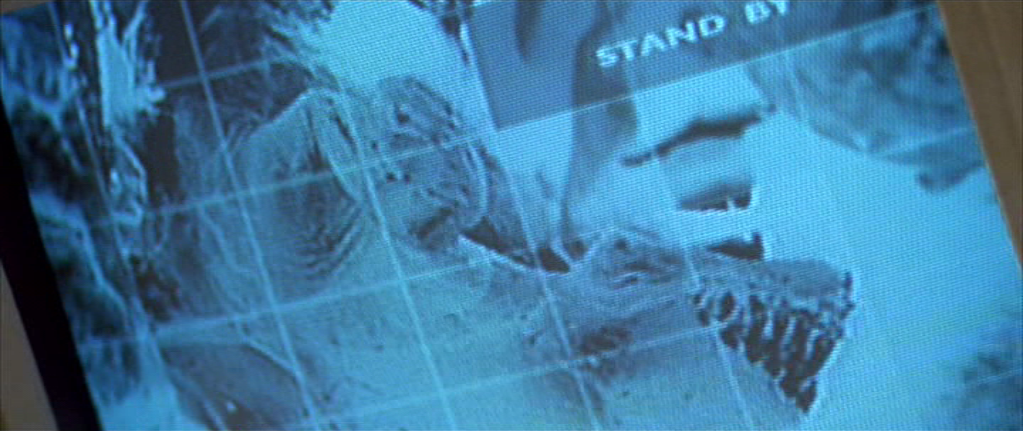
The only justification I can see for this scene’s inclusion lies in the contrast between the unsuccessful rape and the successful implantation of the alien queen. Over the course of the film, we see Ripley becoming increasingly ill; she feels sick to her stomach, becomes fatigued easily, and finds that her hands shake uncontrollably. When she undergoes a scan to diagnose the problem, she learns that there is an alien queen growing within her. She describes the situation in terms that link the alien implantation with unwanted pregnancy resulting from sexual assault: “I was violated, and now I get to be the Mother of the Year.”

The significance of this development, in terms of both Ripley’s character and the series’ themes, cannot be overstated. We know from the first act of Aliens that Ripley’s worst fear is becoming an alien’s host. The nightmare we witnessed showed the alien bursting from her chest while she lay in a hospital bed, and that film’s theme of motherhood allows us retrospectively to view the scene as an unnatural birth. More than death, Ripley’s fear is giving life to a creature that will bring death.

For a person who values her agency and her mission, this situation is particularly difficult to face. Ripley has basically made it her life’s work to eradicate the Xenomorphs, and now, against her will, she has become the potential grandmother to a whole race of killer aliens. Instead of destroying the aliens, she is helping to create them. What makes this even worse is that she had no opportunity to fight back; she was attacked in a moment of vulnerability and had her agency stripped from her.

Ripley concludes that the only way to regain her bodily autonomy is to destroy her body. Initially, she asks Dillon to kill her, echoing a request she made of Hicks in the previous film. He refuses, saying that he will only end her life after she destroys the Xenomorph that has been hunting his men. She is the only person left alive who can annihilate the aliens, and she must complete the task she set herself before she can end her suffering. What is interesting about this deal is that the narrative does not allow it to come to fruition; Dillon sacrifices himself before Ripley kills the alien. Ripley is left to decide whether she will remain a vessel for the harbinger of humanity’s destruction or finally relinquish her “sole survivor” status. The narrative forces her to take her agency back, just in time for the final showdown.

In the first two films, there are generally two possible outcomes: Ripley will live and eliminate the alien threat, or Ripley will die and the Xenomorphs will wipe out humankind. Either Ripley will win, or Weyland-Yutani will have its prize. In this final confrontation, Ripley comes face to face with a team sent by the Company, who claim that they can retrieve the queen inside of her without causing her harm. They tell her to “let [them] deal with the malignancy,” as if the creature were a cancerous tumour. They promise her that they will destroy it, though she and we know that that is unlikely. Suddenly, the script has shifted: Ripley can live, so long as she allows the alien an opportunity to survive, or she can eradicate the Xenomorphs, as long as she is willing to sacrifice herself. She chooses the latter.

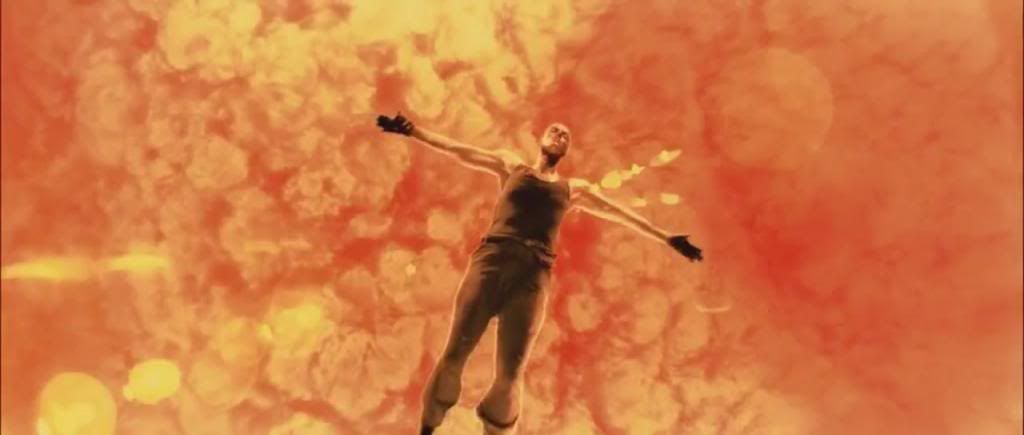
As Ripley throws herself into the furnace, she assumes a crucifix pose, becoming an explicitly Christ-like figure in her moment of self-sacrifice. Yet, even as she assumes this heavenly aspect, she falls into what appears to be the fires of Hell. It’s an image rife with symbolism, and you could view it in a number of ways. Personally, I’ve chosen to interpret the infernal furnace as the rather hellish Alien: Resurrection and Ripley as the character herself, left to burn in the flames of incompetent writing until she is an unrecognizable mass of tissue that might once have been a hero. Of course, that’s just me.

If we ignore the fourth film and treat the Alien series as a trilogy, it allows us to read Ripley’s heroism as part of a long tradition, dating back to the Anglo-Saxons. That’s right; I’m telling you that Ripley is Beowulf. It’s not a perfect fit, but there is a fascinating parallel. In the first film, she takes on a single, mysterious monster who preys on her crew and, in so doing, establishes herself as a hero. In the next film, she destroys the monster’s mother, a creature who was well within her rights to seek revenge for the deaths of her offspring. In the third film, she faces a foe known by one of the inmates as the “dragon.” Like Beowulf, who is an old man when he fights the dragon, Ripley is weak, a shadow of what she once was. She can vanquish her enemy, but, in the end, her life is also forfeit. Her death leaves her people vulnerable to future attacks; dying a hero doesn’t make you any less dead, and a dead champion can champion very little.

Verdict: Actual strong female character (even if the film’s treatment of women in general is dubious at best)


Tuesday, 18 June 2013

Miscellaneous Mondays: In a World... Where Monday Posts Go Up on Tuesdays...

I’d like to offer my apologies for posting this Monday update in the wee hours of Tuesday morning; I was distracted first by a powerful need to see Man of Steel, and then by an equally powerful need to figure out everything that was wrong with Man of Steel. (More on that next week.)

However, while that cinematic experience ultimately disappointed, I did discover a film potentially worth watching this week. It would be more accurate to say that my sister discovered it, as she not only found the trailer, but forced me to watch it by nudging me via text every few minutes. It is thanks to her that I’m now telling you to schedule some time to go to a movie theatre in August.


In a World... tells the story of a group of fierce, mutated, female Amazonian warriors battling prehistoric cavemen hybrids in a scenario based on the Prussian War. Well, sort of. At least for a few minutes. And I’m sure those minutes will be awesome. The rest of the time, however, it tells the story of the woman booked to do the voice-over for the trailer of that film and her struggle to break into the male-dominated field of movie trailer narration.

Lake Bell, the writer, director, and star of the film, has said that she wanted to explore the reason for the exclusion of women from the trailer voice-over field: “The male voice is just deemed, ‘the omniscient voice,’ whether it’s because we coin God as a He, and it could [be] that sort of culturally significant, or it’s just literally the resonance … [is] easier and more authoritative to hear. Which both are interesting conversations, and ones that I wanted to explore in the movie.”

As a person who wants to hear women’s voices telling me what ridiculous hijinks I can look forward to seeing in the next Hollywood blockbuster, and as someone who spent far too much time during my childhood affecting a terrible Russian accent, I will definitely be checking out In a World..., and I hope you do too.