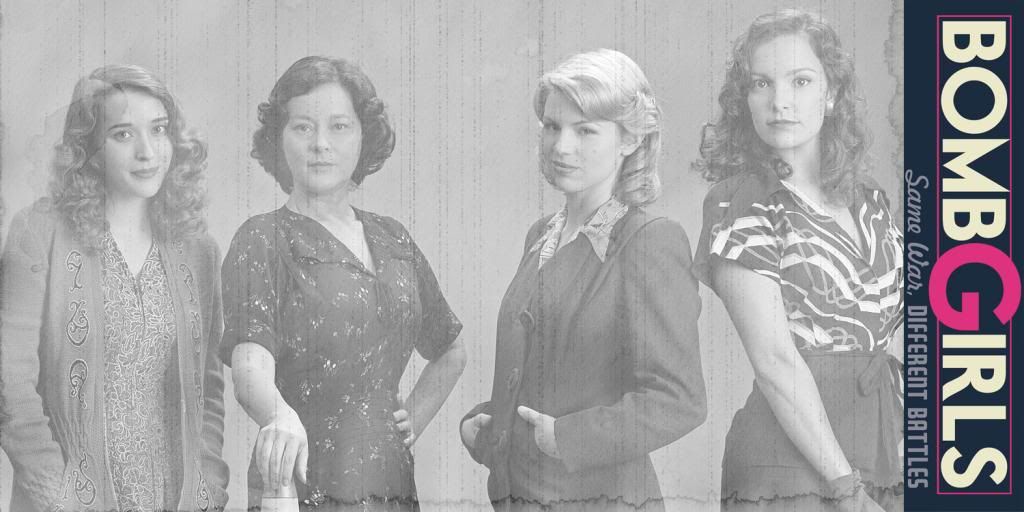
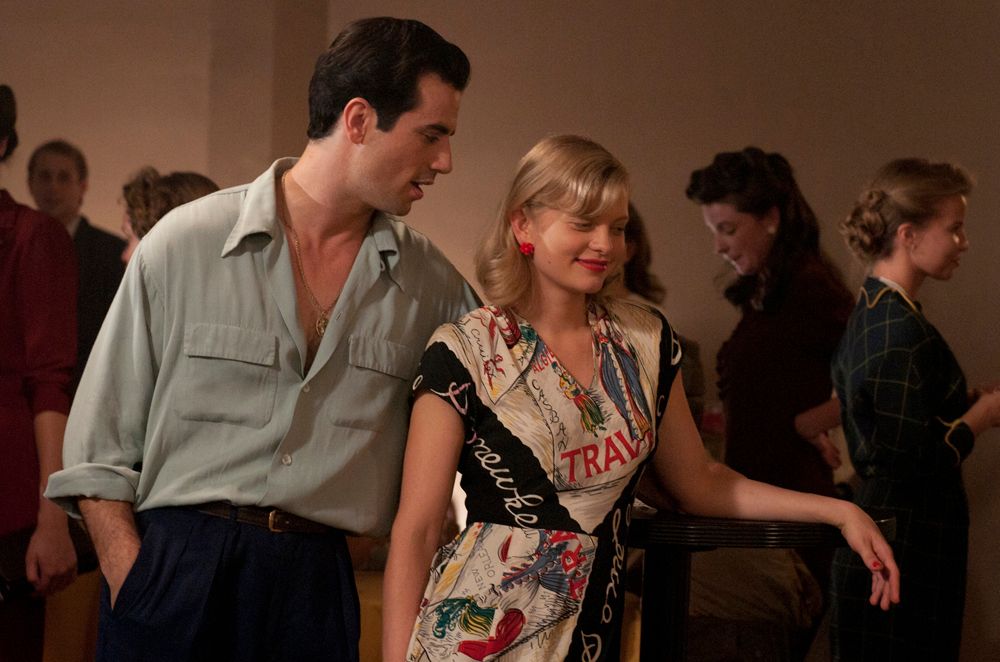
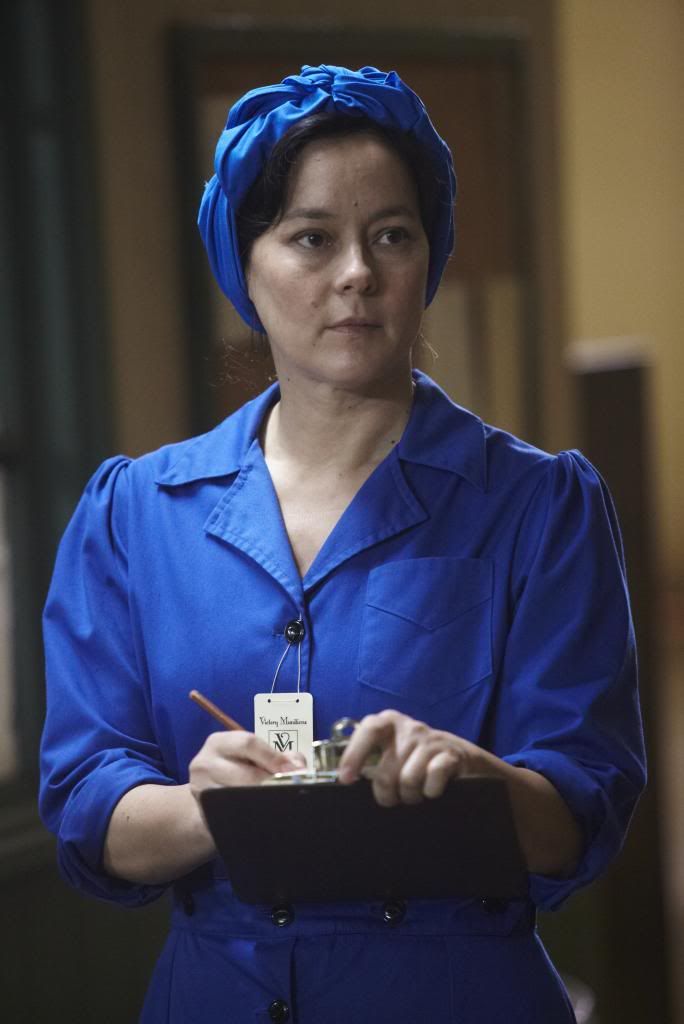
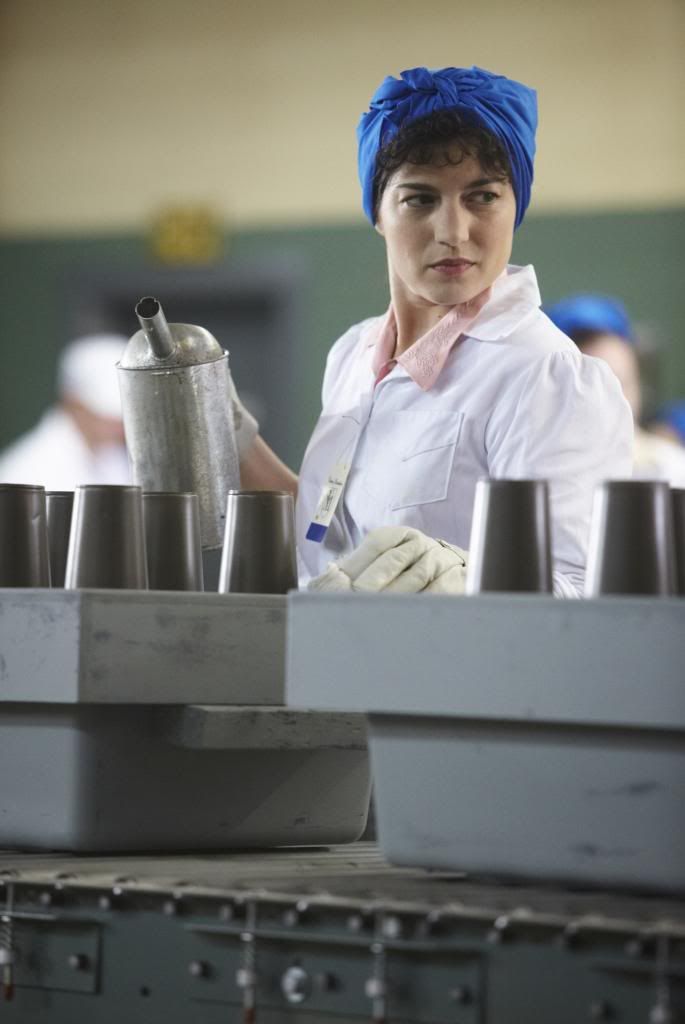
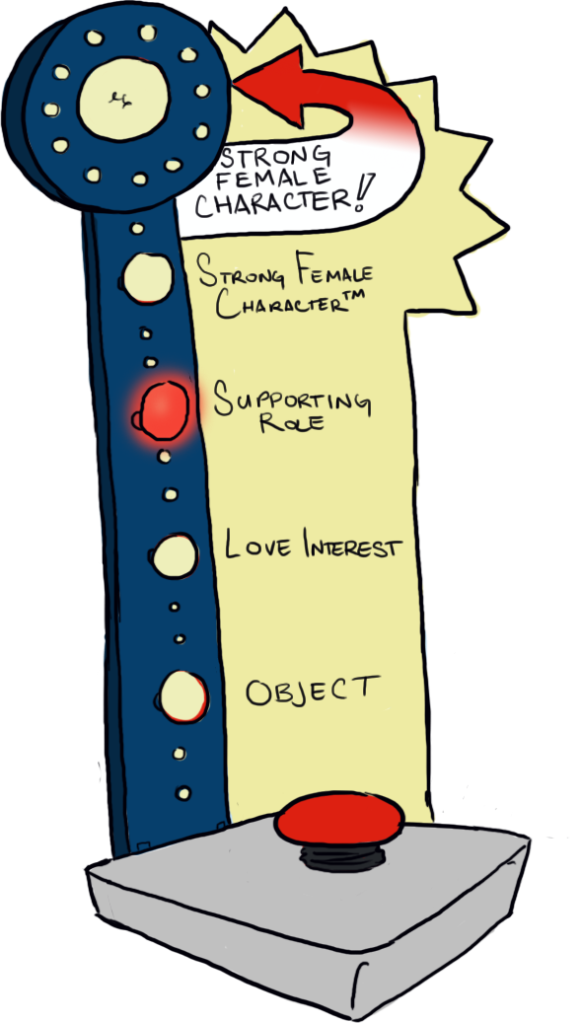
“Bomb Girls is unusual in several ways. For one thing, the four lead characters are women. Happily, MacLennan has a special affinity for creating female roles. The main trick, he says, is to avoid making them much different than male roles. Rather than portraying them as peripheral or sexually objectified, MacLennan’s women display depth, complexity and intelligence.”In this excerpt from an article released to promote the second season of Bomb Girls,
we see Michael MacLennan answering that age-old question: How do you
write strong female characters? This may be one of my favourite
questions asked of writers, simply because the answer is -- and always
will be -- “treat them like human beings.”However,
MacLennan goes further. He suggests that women should be the focal
point of their own stories, and that they should be portrayed as
subjects, not objects. By figuring his show in opposition to the
overwhelming majority of television and film, he shows that he and his
writing staff are highly cognizant of what’s at stake. Mainstream media
is quick to dismiss women’s stories, and studio executives tend to view
the success of women-focused pieces as either a fluke or the result of
employing typically masculine narrative tropes. (Case in point: any and
all recent films in which women characters suddenly become knights.) If Bomb Girls
had failed, its failure would likely have been seen to reflect not on
the relative appeal of one show but on the validity of women-centered
stories in general.So
it seems as if the creators decided to go big or go home. Instead of
merely writing real, strong female characters, they chose to use this
opportunity to critique the mainstream media’s portrayal of women and
expose the social falsehoods that produce these flawed depictions.
Whereas the treatment of Gladys and Vera explored the societal double
standards that existed in the 1940s and continue to dominate our
thinking today, the portrayal of Kate and Betty addresses the way in
which media filters reality for mass consumption.
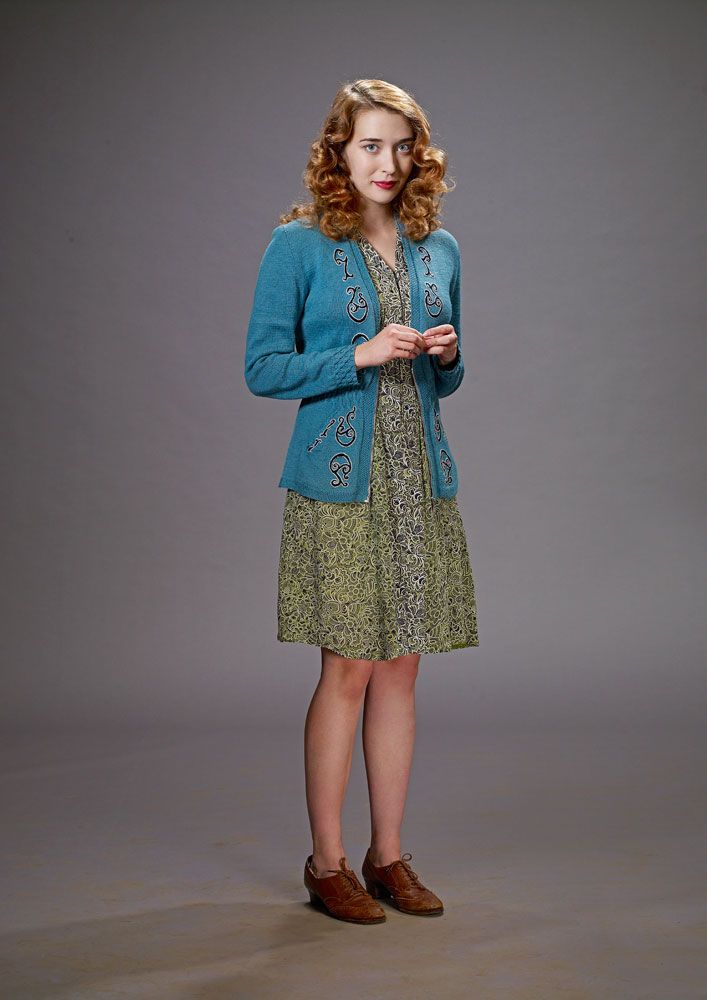
Kate Andrews
The very first thing we see in Bomb Girls
is a shot of a woman’s legs. It’s a familiar image, recurring in films
and television shows across decades. It’s not a new idea to begin a
piece with an extended act of objectification; it is, however, pretty
novel to have the person looking at these legs be a woman.We
are introduced to Marion Rowley on a street corner, singing hymns with
her family and unsuccessfully hiding her interest in those legs. She is a
preacher’s daughter, and when the preacher notices her noticing people
-- a man, in this case -- he immediately turns to deliver his sermon to
his ostensibly wayward daughter. To ensure that his message gets across,
he grabs her hand in a punishing grip. The next time we see her, later
in the introductory montage, Marion and her mother are making final
preparations for her escape, a feat accomplished with her father’s
assurances of her damnation ringing out behind her. And so Kate Andrews
is born.Kate
is, arguably, the nicest character. When Edith gets word of her
husband’s death, Kate attempts to soothe the nervous tension in the
factory by singing Irving Berlin’s “It’s a Lovely Day Tomorrow.” When
Gladys investigates Hazel Macdougall, she volunteers to accompany her
and urges Betty to do the same. Having withstood her father’s
destructive influence, it seems as if Kate has decided to become his
opposite.She
further accomplishes this by breaking down the restrictive boundaries
her father established. In the first episode, this is demonstrated quite
subtly; whereas her father punished her for her appreciative gaze, now
she openly looks. She sees two women dancing and asks Betty for a twirl,
breaking a social taboo. She regards Gladys’ silk stockings -- yet
another woman’s legs -- and asks to touch them. By taking these
seemingly innocuous actions, she begins the process of actively engaging
with a world that she was previously banned from seeing, much less
enjoying.While
learning to exist beyond her father’s carefully constructed walls, Kate
also demonstrates the ability to see the similarly arbitrary nature of
certain social rules. When Lorna suspects Kate of theft, she assigns her
to the storeroom, a vast, dark space that seems devoid of life until
Kate hears a male voice singing. Looking for the owner of the voice in
the canteen, she alerts a White male worker to her presence in the
storeroom. He later attempts to rape her. In a subversion of the Birth of a Nation-style
trope of Black masculinity violating White femininity, the owner of the
voice, an African-Canadian man named Leon, saves her. While Betty
cautions her to avoid Leon, arguing for the bigoted belief that he was
merely saving her for himself, Kate spends much of the next two episodes
seeking him out.An
argument could certainly be made that Kate displays a tremendous amount
of privilege in constantly trying to converse with Leon in public, as
it would be him who most likely suffered for the transgression. At the
same time, however, this can be seen as a positive step in Kate’s
progression toward becoming her own person. Harbouring little to no
negative sentiment toward “Negroes,” she is unwilling to obey societal
rules that dictate the people with whom she can and cannot converse. In
this way, she is markedly more open-minded than Betty, whose racist
attitudes can be only partially explained -- and certainly not excused
-- by her fear that Kate is more attracted to Leon than to her.
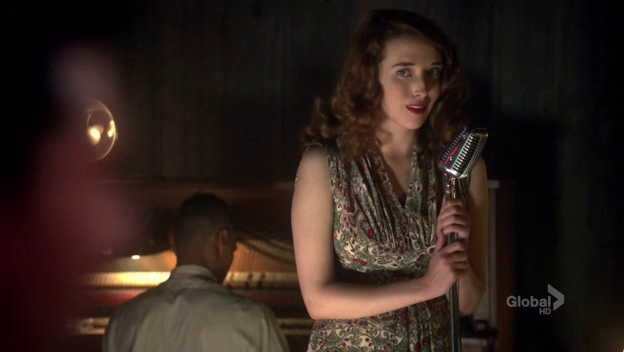 Leon
is much more than mere evidence that Kate can disobey rules. Beyond his
value as an intriguing -- if somewhat underdeveloped -- character in
his own right, Leon is Kate’s gateway to music, and music is Marion’s
gateway to Kate. As Marion, Kate was raised with religious music, but it
is through Billie Holiday’s work (and Leon’s recommendation) that she
becomes empowered by her singing. She appears to identify with the
singer to the point of projection, interpreting Holiday’s musical
stylings as the message, “Don’t judge me. We all have our secrets.” She
sees in a musical career the potential to find happiness and proudly
plans to pursue it despite the risk of failure: “I found something I
love. I don’t care if I fall on my face.” Singing allows her to assert
her desires, giving both literal and figurative voice to her new goals.Music
is Kate’s chosen form of self-expression. As she observes in the sixth
episode, “You know, I used to sing to feel something. Now it’s more like
I feel something and I sing.” As Marion, she was so divorced from her
own emotions that she had to experience them vicariously, employing
other people’s words in order to access other people’s feelings. As
Kate, she has broken through this barrier and finds herself able to
experience and express her own emotions, relying on the words of others
merely to lend some order to her newly liberated feelings. It’s the
difference between false Hallmark sentiment and a sonnet by Neruda.In
the most effective instance, however, it’s actually a song by Ralph
Rainger and Dorothy Parker called “I Wished on the Moon.” Kate directs
her performance toward Betty, her sort-of love interest and number one
cheerleader. Despite this dedication and a number of other indicators of
attraction on Kate’s end, her true feelings about Betty are left
frustratingly ambiguous. What is perhaps even more frustrating is the
fact that that is precisely how things should be. Kate has had any
possibility of a healthy relationship to her sexuality quite literally
beaten out of her. Although she has pushed her way into a world where
she can physically look and touch, her new freedoms cannot completely
obliterate the old, ingrained psychological restrictions. We
see her struggle with these internal blocks on several occasions, most
notably the photoshoot with Betty’s associate, Chet. In order to secure
papers for her new identity and render valid the person of Kate Andrews,
Kate agrees to do a pin-up photoshoot. When she expresses reservations,
Betty encourages her, stating that she has a “new name, new job, new
life.” Marion cannot pose seductively, but Kate must, if only to
establish herself as the new person she needs to become.
Leon
is much more than mere evidence that Kate can disobey rules. Beyond his
value as an intriguing -- if somewhat underdeveloped -- character in
his own right, Leon is Kate’s gateway to music, and music is Marion’s
gateway to Kate. As Marion, Kate was raised with religious music, but it
is through Billie Holiday’s work (and Leon’s recommendation) that she
becomes empowered by her singing. She appears to identify with the
singer to the point of projection, interpreting Holiday’s musical
stylings as the message, “Don’t judge me. We all have our secrets.” She
sees in a musical career the potential to find happiness and proudly
plans to pursue it despite the risk of failure: “I found something I
love. I don’t care if I fall on my face.” Singing allows her to assert
her desires, giving both literal and figurative voice to her new goals.Music
is Kate’s chosen form of self-expression. As she observes in the sixth
episode, “You know, I used to sing to feel something. Now it’s more like
I feel something and I sing.” As Marion, she was so divorced from her
own emotions that she had to experience them vicariously, employing
other people’s words in order to access other people’s feelings. As
Kate, she has broken through this barrier and finds herself able to
experience and express her own emotions, relying on the words of others
merely to lend some order to her newly liberated feelings. It’s the
difference between false Hallmark sentiment and a sonnet by Neruda.In
the most effective instance, however, it’s actually a song by Ralph
Rainger and Dorothy Parker called “I Wished on the Moon.” Kate directs
her performance toward Betty, her sort-of love interest and number one
cheerleader. Despite this dedication and a number of other indicators of
attraction on Kate’s end, her true feelings about Betty are left
frustratingly ambiguous. What is perhaps even more frustrating is the
fact that that is precisely how things should be. Kate has had any
possibility of a healthy relationship to her sexuality quite literally
beaten out of her. Although she has pushed her way into a world where
she can physically look and touch, her new freedoms cannot completely
obliterate the old, ingrained psychological restrictions. We
see her struggle with these internal blocks on several occasions, most
notably the photoshoot with Betty’s associate, Chet. In order to secure
papers for her new identity and render valid the person of Kate Andrews,
Kate agrees to do a pin-up photoshoot. When she expresses reservations,
Betty encourages her, stating that she has a “new name, new job, new
life.” Marion cannot pose seductively, but Kate must, if only to
establish herself as the new person she needs to become.

Here
we see the matter of the gaze pop up again. Initially, Chet is figured
as the bearer of the gaze, the traditional male viewer who controls the
mode of objectification in the form of the camera. However, the gaze
soon shifts to rest with Betty, who watches Kate from next to the
camera, encouraging her to try flirty poses. Betty helps Kate to access a
heretofore unknown sexy side, and she does it by treating her like a
human being. Unfortunately, the status quo is restored when we are again
made aware of the presence and power of the male gaze, with Chet’s
charming observation that “Kate Andrews is going to be comforting a lot
of lonely servicemen.” It is a harsh reminder that the performance that
Betty and Kate collaboratively produced will ultimately benefit men who
think of the woman in the picture as nothing but a sexual object.What
helps to temper this brutal realization is the restoration of the queer
female gaze. In her final scene of the episode, Betty sits on her bed,
cross-legged, perusing Kate’s photos. She appears to view them with just
as much sexual interest as the men, but the difference lies in her
familiarity with the subject of the photographs: she is interested in
Kate as a person, and the pictures merely allow her to enjoy her image.
These looks were directed at her just as they were directed at the
camera.Unfortunately,
Betty is not the only person who recognizes the person in the photos,
as Kate’s father uses them to track her down. Despite leaving her father
behind, Kate does not entirely escape him. If Gladys’ boundaries are
societal, Kate’s are paternal. He is the towering figure in her life,
the one true authority to which she turns when she seeks guidance, as
evidenced by her tendency to quote her father when she is in need of an
adage. He is her tormentor and warden, forcing her to adhere to his
unconscionable moral code. Ever-vigilant and ever-present, he is an
almost supernatural being, a corrupted god produced by Kate’s fear.When
he arrives, the show suggests that he may be a paranoia-produced
apparition, a flashback like the one that featured a helpless Kate
looking on as Marion was nearly drowned by her father’s hand. He soon
proves himself all too real, and his influence immediately starts
seeping back into Kate’s life despite her insistence that she would
rather kill herself than return to him. Still, the signs that she is
slipping back into her earlier identity are abundant. “You honestly
think your father would rather hurt you than see you happy?” she
inquires of Gladys, as if she didn’t have ample experience of this kind
of paternal control. She apologizes for her father’s behaviour, telling
Leon that “he worked so hard to find [her], [her] father, so very sorry
for what he’d done.” She is justifying her decision to return home even
before we learn that she has made the decision.
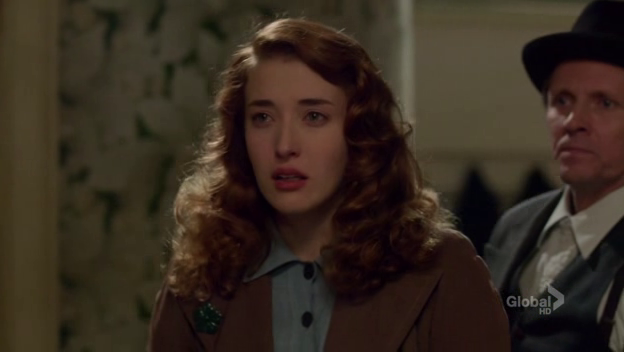
When
Kate leaves the boarding house, her regression is complete; the show
makes this explicit by having Kate respond to the use of her new title
with “My name’s Marion.” She rejects Betty’s assertion that she has
freedom in a new life, dismissing both the quality of that life -- “What
kind of life? I make things that kill people, I debase God’s gift, I
sing in dens of sin, I drink, smoke, consort with deviants” -- and the
idea that she acted of her own free will -- “I was seduced.” All of this
comes across as an impressive act of ventriloquy, as Kate speaks the
words that her father likely used to undermine her new self. Still, her
delivery is hardly robotic, even if we may have to wait whole seasons to
identify the emotion that causes her voice to break when she tells
Betty that she never wanted her. It is this emotion that suggests that
Kate has not been completely eradicated to make room for Marion; this
woman still feels.Many
viewers of the show argue that Kate’s decision to return to her father
in the final episode of the first season shows her to be weak. I
contend, however, that there is basically no way in which Kate can be
seen as weak. She survived traumatic physical, emotional and
psychological abuse and managed to escape with only the help of her
similarly abused mother. She forged a new identity (sometimes literally)
and sought to make Kate Andrews a happier, more complete person than
Marion Rowley had ever been. She did things that terrified her, simply
because they had to be done. She also went back to her abuser because
she needed to tend to her sick mother. She
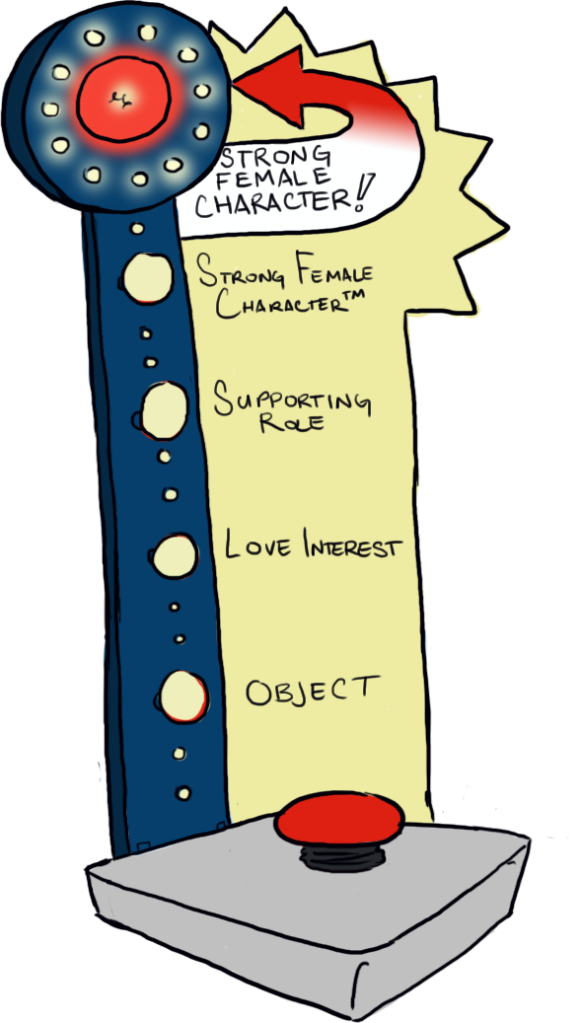
is anything but weak.Verdict: Actual strong female character
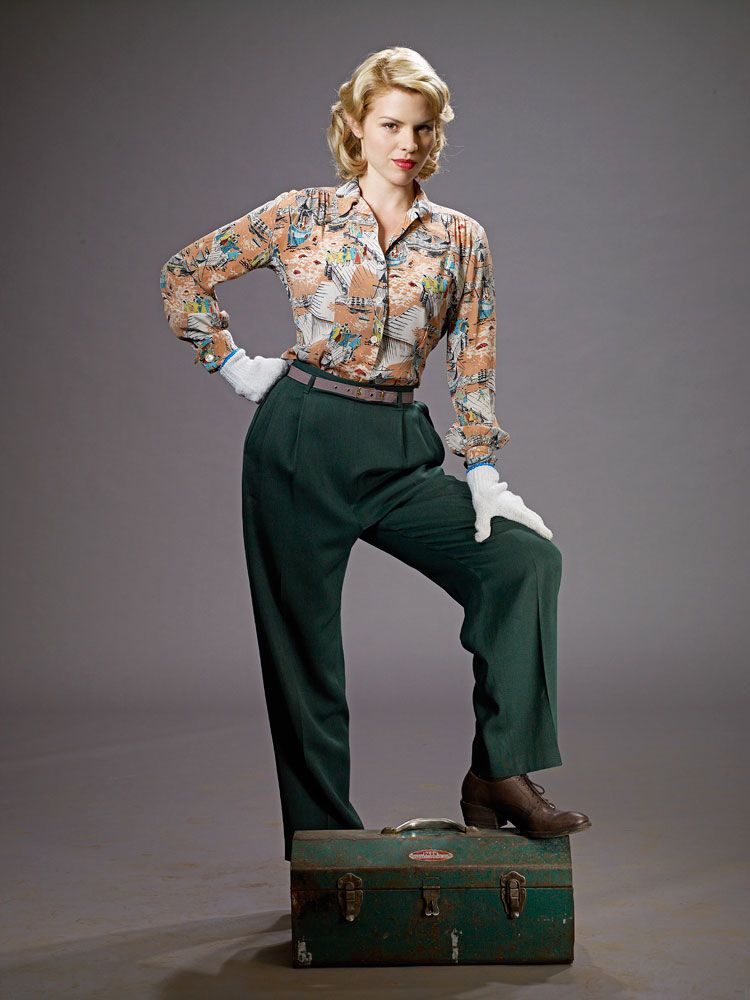
Betty McRae
"In terms of the story I wanted to tell of [Betty], it was not of somebody who understood herself and could identify or have the language to come out, per se," MacLennan said. "Rather somebody, like many women at the time, who is discovering herself. And discovering her kind of, what sets her heart ticking. I think she's somebody whose [sic] been very guarded until this sort of transformative force comes along in the shape of Kate Andrews."Betty
is a young woman from the Prairies who fears the threat of German
U-boats from any and all bodies of water. Betty is a master practitioner
of the carefully careless lean. Betty is the best worker at Victory
Munitions. And Betty, despite lacking the vocabulary to identify herself
thusly, is very, very gay. Accordingly, her first season storyline
revolves around the difficulties of being a queer person in the 1940s.Betty’s
secret is a strangely open one and she herself appears on paper as
something of a stereotype. She wears trousers, keeps her hair short, and
has a typically masculine gait. Raised on a farm before she moved to
Toronto, she comes from a family of brothers and, as MacLennan suggested
in the same interview already quoted, she is “really only comfortable
in a male milieu.” She’s one of the guys, and now, faced with the
prospect of a few years spent surrounded by women, she has to learn to
adjust.She
is also one of the only women in the factory who is used to doing
manual labour as a job, and it shows in her status in the factory. Not
only is she the best bomb-maker on the line, but Betty is entrusted with
training the new workers. She introduces them to their new jobs with a
telling pep talk: “Here’s the deal, ladies: you do fine embroidery, you
can assemble a time fuse. If you sew buttons, you can thread a
detonator. If you can pour tea, you can pour amatol. It’s no big whoop.
Except some
folks don’t see it that way, and the guys are crapping bullets, afraid
they might not get their easy street jobs back after you’ve helped them
win the war. You ignore ‘em first, talk tough second... That doesn’t
work? You slap ‘em silly.” In one speech, she dismantles the
hierarchical value structure of gendered work, showing that women’s
domestic tasks and men’s public jobs are differentiated by nothing more
than the materials used. She also reminds the women that they have a
right to defend themselves against disparaging comments, even offering
violence as a possible tool. She wants to instill confidence in her
co-workers.However,
after the bad bomb test, Betty proves herself somewhat unwilling to
challenge the status quo. When the women are blamed for the bad bomb,
she offers suggestions to improve their work environment. Still, she
does not support Gladys’ attempt to stand up to Harold Akins. Instead,
she dismisses their valid concerns as just talk, “like women do.”
Confronting individual male workers is fine, but challenging the system
itself is unthinkable.
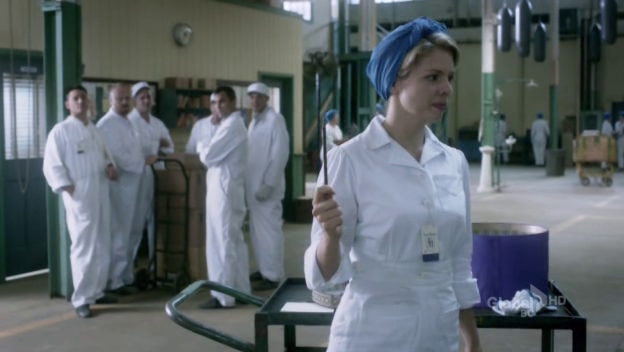 It
is completely unthinkable, until Gladys Witham comes along with her
suggestion hatbox. When the male workers read out the lewd, insulting
suggestions with which they filled the box, they allow Betty to see the
act of challenging the system as an opportunity to tell off the men
whose behaviour, in and of itself, is a threat to workplace safety.
Whereas Gladys is somewhat chastened by seeing her tool of empowerment
become a weapon of oppression, Betty is spurred into action. She realizes
that allowing the men to bully Gladys in this way will lead to them
pressing their advantage and tormenting the rest of the women. So she
steps forward and uses the box for its intended purpose, stating, “These
pinheads think we should work six days a week and never have an idea in
our pretty little heads about how to do our own damn job.” It’s a
matter of pride; Betty might not buy into Gladys’ grand feminist ideals,
but she’ll be damned if she lets a bunch of knuckle draggers tell her
she doesn’t know how to do her job.As
the wealthy outsider, Gladys could not gain support for her suggestion
box, but Betty, the star worker, convinces every woman on blue shift to
make their voices heard. She also refuses to let Gladys take the blame,
pulling a sort of “I am Spartacus” show of solidarity when Lorna demands
to know who is responsible. What is particularly notable about this
scene is the way in which it is framed within the episode. When Gladys
began her unsuccessful crusade, Kate informed her that her failure was a
sign that “nobody wants a Joan of Arc to lead us to battle.” After a
working class woman steps up to lead, however, she assumes just this
role. Gladys makes this explicit by referring to Betty as “our Joan of
Arc.” In her moment of rebellion, Betty becomes a heroic figure.The
heroic narrative clings to Betty throughout this first season. When she
is selected to star in a newsreel, Kate calms her nerves by telling her
that “they’re all gonna see what [Kate] see[s]: a hero.” Even in the
final scene of the season, when Gladys suggests that they will work
together to find Kate, there are narrative underpinnings of a knight
going to save her bewitched lady from a scripture-citing dragon. The
figuring of a queer woman in this light suggests that the show is doing
some deliberate critical work. As I argued in our post about Adventure Time’s
Marceline, “when shows refuse to represent LGBTQ people onscreen, they
are telling these audience members that they have no place in the world
that the show creates. They cannot be heroes or princesses or badass
vampires; they can only be silent and invisible.” Bomb Girls not only includes queer people, but explicitly argues for their recognition as heroes. Because
this critical work is carried out so subtly, the show couples it with
an explicit critique of LGBTQ media representation. In the fourth
episode, Victory Munitions is selected to be featured in a newsreel to
recruit women for the bomb factories. Initially, the filmmaker, Russell
Joseph, wants Gladys for the role of everywoman bomb maker. The show uses
this opportunity to demonstrate the problems inherent in assuming that
the women will be attracted to the kind of bomb girl that pleases the
male gaze. Lorna points out the flaw in Russell Joseph’s plan: “Just
because you’d like to get her out of that uniform and into your little
movie, doesn’t mean the average girl will see her and think, ‘That’s
me.’” When he responds that he knows how to sell this war, she responds,
“To men, maybe.”
It
is completely unthinkable, until Gladys Witham comes along with her
suggestion hatbox. When the male workers read out the lewd, insulting
suggestions with which they filled the box, they allow Betty to see the
act of challenging the system as an opportunity to tell off the men
whose behaviour, in and of itself, is a threat to workplace safety.
Whereas Gladys is somewhat chastened by seeing her tool of empowerment
become a weapon of oppression, Betty is spurred into action. She realizes
that allowing the men to bully Gladys in this way will lead to them
pressing their advantage and tormenting the rest of the women. So she
steps forward and uses the box for its intended purpose, stating, “These
pinheads think we should work six days a week and never have an idea in
our pretty little heads about how to do our own damn job.” It’s a
matter of pride; Betty might not buy into Gladys’ grand feminist ideals,
but she’ll be damned if she lets a bunch of knuckle draggers tell her
she doesn’t know how to do her job.As
the wealthy outsider, Gladys could not gain support for her suggestion
box, but Betty, the star worker, convinces every woman on blue shift to
make their voices heard. She also refuses to let Gladys take the blame,
pulling a sort of “I am Spartacus” show of solidarity when Lorna demands
to know who is responsible. What is particularly notable about this
scene is the way in which it is framed within the episode. When Gladys
began her unsuccessful crusade, Kate informed her that her failure was a
sign that “nobody wants a Joan of Arc to lead us to battle.” After a
working class woman steps up to lead, however, she assumes just this
role. Gladys makes this explicit by referring to Betty as “our Joan of
Arc.” In her moment of rebellion, Betty becomes a heroic figure.The
heroic narrative clings to Betty throughout this first season. When she
is selected to star in a newsreel, Kate calms her nerves by telling her
that “they’re all gonna see what [Kate] see[s]: a hero.” Even in the
final scene of the season, when Gladys suggests that they will work
together to find Kate, there are narrative underpinnings of a knight
going to save her bewitched lady from a scripture-citing dragon. The
figuring of a queer woman in this light suggests that the show is doing
some deliberate critical work. As I argued in our post about Adventure Time’s
Marceline, “when shows refuse to represent LGBTQ people onscreen, they
are telling these audience members that they have no place in the world
that the show creates. They cannot be heroes or princesses or badass
vampires; they can only be silent and invisible.” Bomb Girls not only includes queer people, but explicitly argues for their recognition as heroes. Because
this critical work is carried out so subtly, the show couples it with
an explicit critique of LGBTQ media representation. In the fourth
episode, Victory Munitions is selected to be featured in a newsreel to
recruit women for the bomb factories. Initially, the filmmaker, Russell
Joseph, wants Gladys for the role of everywoman bomb maker. The show uses
this opportunity to demonstrate the problems inherent in assuming that
the women will be attracted to the kind of bomb girl that pleases the
male gaze. Lorna points out the flaw in Russell Joseph’s plan: “Just
because you’d like to get her out of that uniform and into your little
movie, doesn’t mean the average girl will see her and think, ‘That’s
me.’” When he responds that he knows how to sell this war, she responds,
“To men, maybe.”
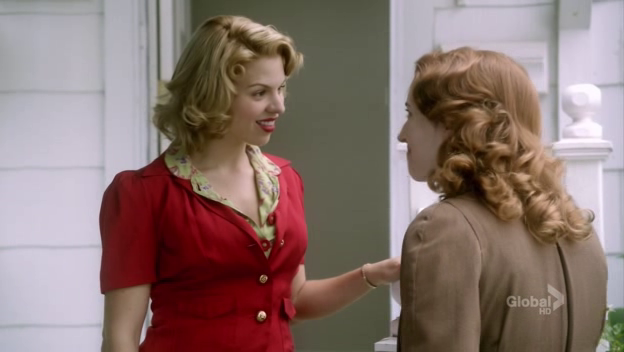
Lorna
argues that women want to be able to identify with the woman onscreen.
She proposes that they select the best worker, and with her
recommendation, Betty becomes the model bomb girl. For a person like
Betty, well versed in all the reasons why she is not society’s ideal
woman, this could be her moment, when what she can do might prove enough
to overshadow what she is. Unfortunately, at every step of production,
Betty is transformed into an alternate self, one that Joseph assumes is
more palatable to the masses. Her face is caked with makeup, her hair
carefully coiffed, and her breasts made the centre of attention.While
most of the production focuses on making Betty something she detests,
one element makes her fictional self someone she might aspire to be. The
film crew does a location shoot at a picturesque, white house, and
Betty reveals to Kate that that is what she is saving up for: a house of
her own, to be shared with a “housemate.” She wants to take advantage
of the opportunities afforded her by the changing social structures to
make a life for herself that resembles the perfect white picket fence
fantasy that she’s internalized. At the same time, she wants to subvert
social norms by reimagining this scenario with a female partner.
Unfortunately, her preferred partner has internalized the same image in
its original form, responding to Betty’s plan to buy a house with
“That’s what husbands are for.” Still, the dream remains, as Kate also
agrees to be Betty’s housemate.When the factory workers sit down to watch the newsreel, Bomb Girls
makes its point about the devastating effects of queer erasure on real
LGBTQ people. Betty sees that they have edited the scene shot at her
dream house to include children running into her arms. To make matters
worse, the voice-over states -- to the accompaniment of the male workers’
catcalls and sexual innuendo -- “It’s not just love of country that
keeps Betty going, it’s her love of a very special man. Once her husband
comes home from fighting Jerry, she’ll be happy to return to her wifely
duties.” Like Kate before her, Betty finds that her image has been
manipulated to suit the male gaze. In addition, her real identity as a
lesbian has been erased in order to reinvent her as a false heterosexual
ideal.In
so doing, the filmmakers unknowingly destroy Betty’s dream of a normal
life. As she says, “It shows you what a freak I am. They had to make up a
whole set of lies about me.” Lorna assures her that women will see her
worth as a worker and as a person, and that they will want to be like
her. Betty dismisses these words of comfort, stating, “Nobody would want
to be me, Mrs. Corbett. Nobody.” Understanding that the fiction is the
only acceptable truth, she can no longer see herself as a person worthy
of audience identification.Complicating
this critique is Kate’s response. She dismisses Betty’s concerns with
her portrayal, telling her that “people just thought it was fun” and
thereby presenting the familiar “it’s just a TV show” argument. Betty,
however, knows that what is just a TV show is also her life, and she
confesses that she would sometimes like to be that person, if only to
make her life easier. Kate responds by telling her that “you don’t need
everybody liking you, just the ones that matter.” She tries to make
Betty understand what she herself has discovered: you don’t have to be
or do something just because other people think you should. Kate is
reminding Betty that she isn’t her mass-produced image, but a person
that other people appreciate.This
is why Kate’s rejection in the final episode is so crushing. Although
she answers Betty’s love confession with an assertion that she never
wanted Betty, I would argue that it’s the rest of Kate’s speech that
causes the most lasting damage. By calling Betty a deviant and claiming
that she seduced her, she is expressing the common belief of the time.
She disavows knowledge of the actual Betty and condemns her by reducing
her to a stereotype. Kate, the person who mattered most, delivers the
cruelest blow.
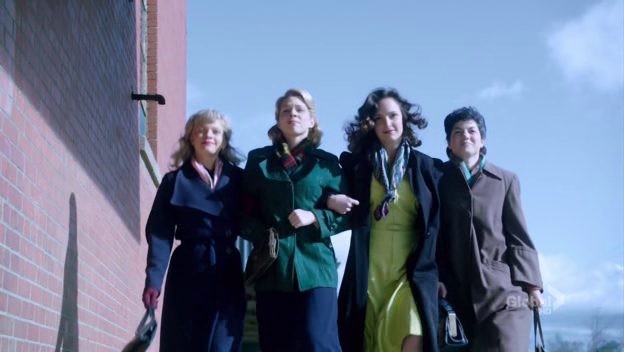
The
last time we see Betty and the rest of the bomb girls is in the final
scene of the season. Emotionally battered by their romantic losses --
Kate to her father and James to officer training -- Betty and Gladys
contemplate their next course of action. Betty’s ruminations take a
philosophical turn: “The big promise: that we might actually get the
things we want. What if it’s a lie?” By this time, Betty is painfully
familiar with the duplicitous nature of desire, as she has had the
things she most wants within her grasp only to have them ripped away.
Gladys responds to her pessimistic observation, saying that they can’t
stop trying and that they’ve got a war to win.This
war, while ostensibly the massive historical conflict around which the
show revolves, could just as easily be read as the show’s battle for
proper representation. In these final moments, Gladys links her arm with
Betty’s and they both confidently stride toward the factory, Edith and
Vera joining them. Playing over this proud march is a snippet of “Ain’t
Nobody’s Business”: “There ain’t nothin’ I can do, or nothin’ I can say
that folks don’t criticize me, but I’m gonna do just as I want to
anyway. Ain’t nobody’s business if I do.” In the final shot, set to that
final line, we see the four women, arms linked, the picture of female
friendship and solidarity. Each one of them has done wonderful and awful
things, but in every case they have done what they thought was right.The
season closes as it opened: on the image of women’s legs. This time,
however, we know the women as people and know, therefore, that this
final nod to objectification is actually a refusal to fall victim to it.
These women have earned their subjectivity, and it is therefore
particularly telling that the gaze in the last shot is not only not
attributed to any character, but is indeed filmed from such an angle
that it could not constitute a character’s point-of-view. After all, it
ain’t nobody’s business what they do.Verdict: Actual strong female character
After the first season of Bomb Girls aired,
its showrunner and co-creator, Michael MacLennan, did an interview with
the pop culture bloggers of The Mind Reels. Drawing a comparison
between the two shows as period dramas, one of the interviewers asked
MacLennan what he thinks of Downton Abbey.
MacLennan’s response was an impressively diplomatic phrasing of a very
simple message: it all went to hell in the second season. (This section
begins around 49:30, but do yourself a favour and listen to the whole
thing.)This is precisely the reason why, although the original Strong Female Character schedule had January booked as Downton Abbey
month, we couldn’t go through with it. Why discuss a show that’s gone
off the rails when you can spend your time on a series that shows every
sign of staying on course?The reason why we chose Bomb Girls -- and the reason why we will eventually deal with Downton -- lies in its writers’ approach to historical drama. In its first season, Downton Abbey
looked like it was going to chronicle the downfall of the aristocracy,
the rise of the middle class, and the changing status of women’s rights.
Instead, it became a soapy mess dominated by love triangles and
half-baked storylines often made possible by what seemed like daily
trips back from the frontlines of the First World War.Bomb Girls,
by contrast, follows through with its premise of representing the often
unacknowledged efforts of the women left at home. More than this,
though, it does what we would like every period drama to do: use its
historical setting to address issues that are still relevant in
contemporary life and to interrogate our perception of ourselves as a
society advanced beyond the people of that era.
Gladys Witham
A
perfect example of this is the character of Gladys Witham. Gladys is
the wealthy heiress of Witham Foods, a company doing its part in the war
by capitalizing on rations contracts. After getting a job in the office
at Victory Munitions, she finds herself attracted to the life and work
of the bomb girls. Over the course of the first season, she struggles to
find a place for herself both within and beyond the restrictive
boundaries of her privileged life, confronting the realities of a social
system that prefers to view her as a cardboard cutout than as a person.In
exchange for her wealth, Gladys is expected to relinquish all
aspirations of being anything but arm candy and breeding stock. She
possesses a keen mind for business tactics, but is excluded from taking
an active role in her father’s enterprise by virtue of being a woman.
Following a dinner that Gladys disrupted by daring to stand up to the
guest, her expected role is explained by her mother: “There are other
ways -- our ways -- to effect an outcome. So you powder your nose and
walk downstairs. You’ll titter at jokes, compliment tie clips, and charm
Tank Treleven’s cold, crass heart. That, dear Gladys, is your job.” Her
power is limited to motivating the people who possess real power. She
is intended to be, at best, a conduit; through her, her father’s power
passes to her husband and her sons. Gladys, however, refuses to play
this role. Instead, she takes advantage of the new opportunities offered
by the war to become an active participant in her own life.Gladys’
obsession with the roles people play in life appears to originate in
her love of film. Her vanity mirror is surrounded by pictures of
glamourous movie stars, and she models her own dress and behaviour on
theirs. While she yearns to be onscreen, she tries to temper this
longing by imbuing her life with Hollywood magic. On one occasion, her
father suggests that her enthusiastic support of the war effort is just
part of a game, in which she dresses up as the starlet du jour and
re-imagines the war as a production with her as the lead. On another,
she uses the events of a Hitchcock film in order to confront her fiancé
about his infidelity. The problem with this approach to life, however,
is that Gladys sometimes forgets that other people do not have the
luxury of playing a part.Being
faced with the real conditions of factory work helps her to examine her
privilege. Bomb-making begins as yet another role to which Gladys is
attracted. In the first episode, Gladys looks on as Betty gives the
trainees a pep talk and the expression on her face bespeaks her
enchantment with their work. Ironically, she first becomes enamoured
with the job while listening to Betty explain just how simple and
unremarkable it is. Still, assisting in this work makes her instrumental
in the fight against Hitler and therefore feeds her dramatic appetite;
as she argues when she first asks for the job, “I came here to battle
the Axis, Mr. Akins. I feel I can do more than just alphabetize.” The
problem is that almost no one else in the factory believes her. The
other women on blue shift are reluctant to accept her as one of them,
expressing their opinions that she will either get herself injured or
give up when the work gets too hard. They are always aware of their
vastly different socioeconomic positions; whereas Gladys is attracted to
factory work as a matter of patriotic duty, the other women need this
job in order to feed themselves and their children.
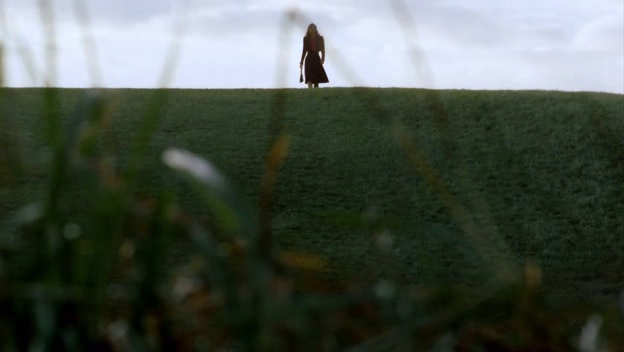
Gladys
receives her first lesson in this harsh reality when she sets out to
improve factory conditions following the detonation of a bad test bomb.
She stands up to the Victory Munitions boss, Harold Akins, about the
double standard inherent in blaming only the women workers for the
problem. When she asks for support from the other women, however, they
claim that their own demand for better conditions was just talk -- the
inconsequential chattering of women. As Kate tells Gladys, “Nobody wants
a Joan of Arc to lead [them] to battle.” Even when Gladys offers them
the shelter of anonymity in the form of a suggestion box -- a fancy hat
box converted into a useful object, a neat symbolic representation of
Gladys herself -- they have to be crudely insulted by the men and led by
one of their own before they will act. Because Gladys is not as
invested in this fight, she must learn to play a supporting role. While
her distance from economic reality allows her to speak up and initiate
the women’s rebellion, she cannot fully take part.Helping
to make her part of the group are Betty and Kate. Initially, Betty is
unhappy with Gladys’ presence on the line, resenting the security of her
seemingly charmed life. Kate is more open to the idea of forging a
friendship, but it is ultimately Betty -- the best worker, the working
class Joan of Arc -- who must accept Gladys. The combination of her
support and Gladys’ willingness to be part of the team of bomb-makers
allows her to state unequivocally, “I belong here. I earned the right to
stand with these women.”Unfortunately,
the right she earned and the privilege she maintains come into conflict
in the final episode. Her controlling father learns that she has been
working on the floor instead of in the office, and he risks the lives of
every person at Vic Mu simply because he wishes to discipline his
daughter. Gladys’ mother orchestrates a plan in which she offers Lorna
money to send Sheila to medical school in exchange for Lorna firing
Gladys. Lorna refuses, and does not give in even when Gladys responds to
her warnings about marriage with a callous “Mrs. Corbett, I’m sorry if
you hate your life. Did you ever think that maybe I have a better one?”
She does, however, use her own positive pregnancy test to get Gladys
fired when she learns that Gladys put Vera on the line with no
consideration for the psychological scars she might disturb. She can
enjoy her right to stand with the other bomb-makers until the moment she
puts their lives on the line.
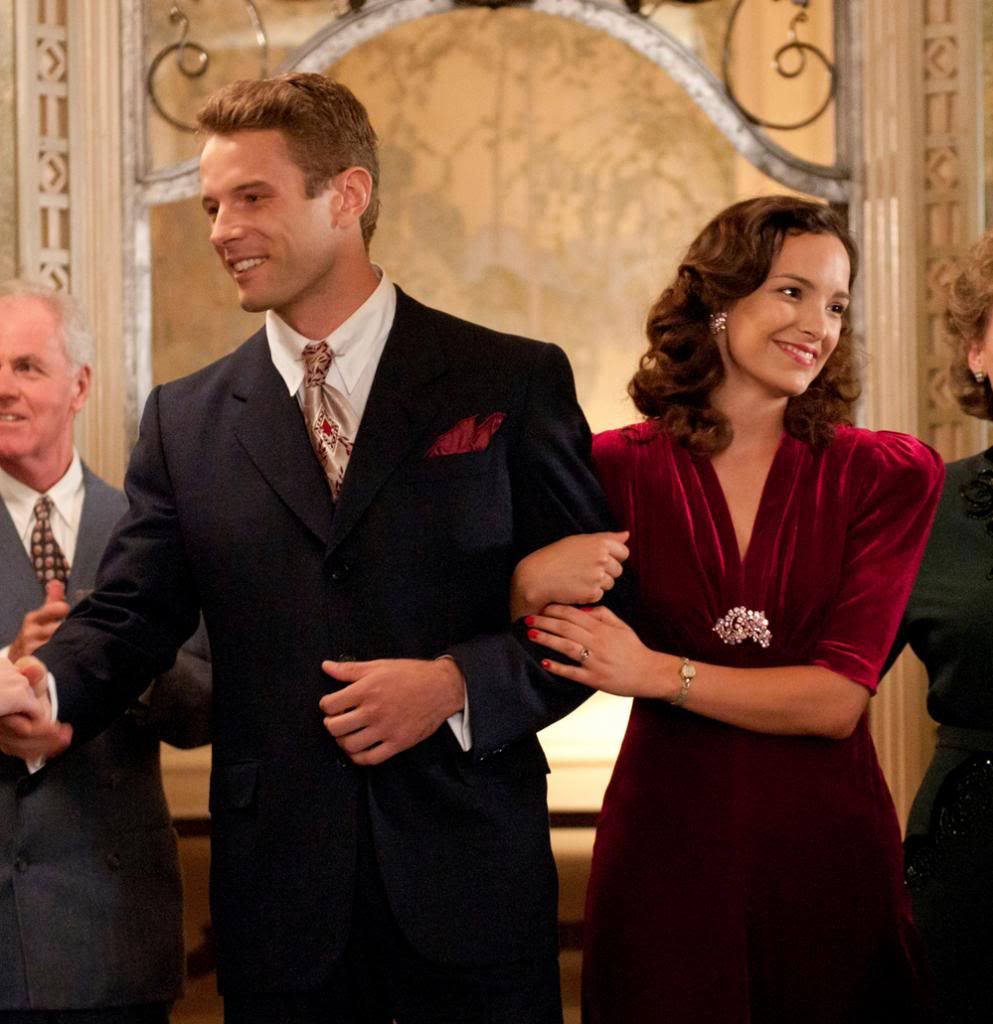
In
addition to this reclamation of personal agency, represented by the
transition from the informal “career” of entertaining to the formal job
of making explosives, the show uses Gladys’ character to explore the
issue of sexual double standards. Both Gladys and her fiancé, James, are
unfaithful in some way, Gladys by engaging in some sexual
experimentation with a soldier and James by having a full-fledged affair
with one of the factory workers. Initially, Gladys becomes a willing
enforcer of these double standards. While Gladys is hurt by James’
actions, she focuses most of her ire on the “other woman,” Hazel, who
has been stealing things that Gladys received from James in order to
validate their secret, physical relationship. Gladys tries to convince
Hazel to confess to the thefts, again caring very little for the fact
that that would lose Hazel her job. Even when Hazel transfers to a
different shift, Gladys slut shames her, stating, “At least I earned my
pin money standing up.”This
again leads us back to the topic of roles. Gladys is constantly
defining herself as “not that kind of girl.” She does so in the first
episode as a way to discourage the soldier’s advances, and again when
she asks James why he chose to pursue Hazel instead of approaching her
about taking the next step in their relationship. The problem is not
that Gladys doesn’t want to have sex with James; on the contrary, her
introductory scene shows her trying to take things further at their
engagement party. The problem lies entirely in the societal construct of
“that kind of girl” and the Madonna-whore dichotomy that it suggests.Despite
her behaviour with Hazel, Gladys demonstrates a canny understanding of
this additional limitation. She explores her sexuality, first with Lewis
and then with James, and her continued assertion that she’s “not that
kind of girl” suggests that she refuses to be painted as dirty or
corrupt simply because she had the audacity to seek out pleasure. She
also rejects the idealized virgin role, telling her fiancé, “You put me
up on a pedestal, James, and when I fall? I’m going to hurt something.”
She fights to be seen as a person, capable of making mistakes and worthy
of experiencing pleasure without the pressure of societal expectation.There
is one final area in which Gladys must confront the difference between
the real and the ideal: the war itself. Gladys spends the first season
championing the war effort, not only doing her part in the factory but
verbally defending the soldiers at every opportunity. She risks familial
repercussions when she calls Tank Treleven out for disrespecting the
troops, and she is instrumental in convincing James and her father to
improve rations production to prevent spoilage. She only questions her
approach when her personal romance comes into conflict with her
romanticization of the war. When James joins up following the attack on
Pearl Harbor, he tells Gladys that he did so because she wanted him to
be a soldier. She tries to tell him that that was before she knew the
realities of what he would face, and that she isn’t “looking for a
hero.”This
is the power of Gladys’ story. In every respect of her life, she is
trying to discover how to negotiate the boundaries of the real and the
ideal. She makes mistakes, but she is willing to learn from them.
Through her struggle, the show explores the construction of social
identity and the arbitrary designations we have for what is “right” or
“proper.” Faced with almost insurmountable societal pressure to conform
to a prefabricated ideal, Gladys nevertheless fights to define the role
that she will play in her own life.Verdict: Actual strong female character
Vera Burr
Vera
is introduced via what comics fans often call a “butt shot,” a shot in
which we see her from behind, leaning down to light a cigarette. In a
show filled with deliberate symbolism, it’s hard to dismiss this moment.
Over the course of the first episode, we learn that Vera is well-known
for her active sex life. She has accepted three soldiers’ marriage
proposals, and considers this to be an act of charity, because, as she
states, “they only propose to you so they got someone to think about
when they’re off sweating in their bunks.” What we love about Vera is
that she controls and embraces her sexuality; she decides to have sex,
she knowingly becomes masturbatory fantasy material, and she feels no
shame for doing so. Just as amazing is the fact that, while some of the
other women are scandalized by her attitude and exploits, there is
absolutely no slut-shaming.As
we all know from our exposure to media, a woman who takes obvious pride
in her physical appearance is often punished for her pride by losing
her beauty. On a superficial level, Bomb Girls
plays into this trope, as Vera suffers a horrible, disfiguring injury
during a moment of distraction on the line. Instead of portraying this
as a punishment, however, the show uses Vera’s injury to delve into a
number of different issues, among them the value of women workers
relative to male soldiers, the reduction of women to their physical
attractiveness, and the effects of depression and PTSD.Several
of these issues are introduced in a speech Lorna delivers to the doctor
responsible for Vera, urging him to treat her as he would any man
injured in service to his country: “You can’t let her leave here
deformed; it will destroy her future. … Vera is
a soldier. Vera risked her life every day to help win this war. Do not
turn your back on her. If you want to see our boys with bullets in their
guns and bombs in their planes, you will show her the same respect. …
Now go in there, and book the operating room, and you do the surgeries,
no matter how expensive or lengthy. You do your best for that girl.”
Although we touched on the meaning of that speech for Lorna, we’d like
to discuss it in more detail as it relates to Vera.While
Lorna is clearly thinking of Bob when she says that a deformity would
destroy Vera’s future, there is more to this than one person hoping to
save another from the kind of suffering she’s witnessed for decades.
These women are enjoying a short period of time during which they are
the ones driving the economy and earning their own livelihood. As long
as the war continues, they have an opportunity for independence;
however, once it’s over, it’s likely that pre-war social realities will
be re-established (with a vengeance, as it turns out). Vera’s injury
doesn’t just put her out of the job while she recuperates or limit her
options for future employment; instead, it stands the chance of
destroying her opportunities for marriage and financial support when the
men come back to reclaim their jobs.Lorna
also argues that Vera is a soldier, and that is one of the show’s many
compelling propositions: that these women in their jumpsuits, making the
bombs, are just as much a part of the military as the men in their
uniforms, using them. Women produce what the men will employ, and that
makes them integral to the fight. The doctor claims that the men must be
their first priority, and Lorna immediately links the process of
prioritizing with ideas of value. That is why it’s so perfect that she
tells them to “do the surgeries, no matter how expensive or lengthy.”
She is telling them that Vera is quite literally worth just as much as
any soldier.It
is one thing for Lorna to make this claim, and another for Vera to
believe it. Vera’s storyline over the course of the season revolves
around her decision to commit suicide. She sees no future for herself,
admitting in the third episode that she can’t even go home to her
family: “Why give them the satisfaction of knowing all along that I was
nothin’ but a pretty face? Now I’m nothing.”

As
one might expect, mirrors play a major role in Vera’s story. At the
beginning of the second episode, she appears detached and numb, claiming
that she “can’t feel a thing.” She does not express any emotion until
she gazes at herself in the mirror, looking first at the unchanged left
side before shifting the mirror to show her right, where the stitches
and swelling dominate her face. It is only when faced with her
reflection that she cries. If you’ll excuse a little English major
indulgence, I’d also argue that the mirror symbolizes the fact that, at
this point, Vera cannot see past her own appearance. Any view of the
future is blocked by this mirror, that can only reflect her own trauma.This
is where Archie comes in. Archie is another Victory Munitions worker
who sustained a major injury on the job. Although Vera is initially
angered by his comments about her injury -- including one particularly
tasteless one about her looking like she’d made out with a cheese grater
-- she comes to understand that jokes are a coping mechanism. As Archie
observes, “You gotta laugh about it, or you’re gonna cry.” Upon
discovering that Vera has been collecting sleeping pills, Archie tries
to convince her not to commit suicide, but she cannot be swayed. It is
only when Archie becomes fatally ill with sepsis that she gives up on
her plan and decides to live.The
speech she delivers in this moment, as she helps someone else die and
decides to live, is an echo of the one Lorna gave in order to save her:
“You know, after my accident, Edith told me Lorna argued with Dr.
Poitier, said he had to do right by me in the surgery. She called me a
soldier, same as any man here. And I liked that. I suppose I still do.
That’s the two of us Archie: we’re soldiers... on the home front.” Vera
has come to value herself and her contributions, and this allows her to
continue to fight.
This
is the point at which many other shows might stop; Vera has decided to
live, she’s displayed great strength in helping someone die with
dignity, and she’s served as an inspiration to us all. That’s why what
happens in the next episode is so necessary to her storyline. In
the final episode of the season, Vera has decided to go back to her
family, seeing no future in Toronto with “a face only a mother could
love.” Lorna refuses to let her go, saying, “My husband came back from
the Great War, months in the hospital, same as you, then home, where the
ankylosis set in. He went in, Vera, and he never came out again.” When
Vera dismisses this comparison by saying that she’s not him, Lorna
states, “That’s right. You’re stronger.”With
this vote of confidence, Vera returns to the factory, where Lorna sets
the example and treats her as she did before the accident. Again,
stopping here would have provided us with our unrealistic happy ending,
but the show follows Vera to the factory floor, where she has been
posted in the same line where she was standing when the accident
occurred. She experiences a panic attack, during which her flailing arms
bump the hanging bombs. In her current psychological state, she would
be a danger to herself and others on the floor. Her future is again
threatened.Vera’s
final scene is one of the most effective, excruciating moments in a
season finale full of them. Knowing she needs employment and can’t risk
working on the line, she offers the factory boss, Harold Akins, sexual
favours in exchange for an office job. The first time I watched it I had
trouble with this scene, but looking at it with a more critical eye, I
would argue that this is the point where Vera proves that she is a
survivor. Before the accident, she had what appear to be fairly high
standards for her sexual partners. She used to do it for her own
enjoyment, but now we see a shift; this isn’t fun, it’s survival. Unlike
Bob, who wallows in his suffering, Vera decides to work her way around
it. She needs to have a life again and cannot do so if she is constantly
subjecting herself to her trauma, so she does what she must. It’s not
nice, it’s not fair, but it is necessary.Verdict: Actual strong female character
Canada
is known for many things: breathtaking natural beauty, an over-dependence on maple syrup, and a population whose famous humility
makes way for brief bouts of patriotism only once every four years, when
we cheer for the gifted athletes we usually ignore and the professional
hockey players we watch almost constantly. We are not, as a rule,
celebrated as the home of fantastic feminist television shows.
However, with the international success of the homegrown drama Bomb Girls, that’s beginning to change. Set during the Second World War, Bomb Girls
chronicles the trials and tribulations of life on the home front for the
women of Victory Munitions, a bomb factory in Toronto. At work, at
home, and at play, these women simultaneously struggle with the sexist
standards of their time and bask in the new freedom allowed them while
the men fight overseas.
I
mentioned in Monday’s post that this show passes the Bechdel test twice
in the first three minutes of the first episode, but what is even more
notable is that it holds to this pattern for the remainder of the first
season. Bomb Girls
is precisely the kind of show that would exist in a post-Bechdel test
cultural climate, in which women in the media are shown to be thinking,
feeling people with important relationships with other women, all of
whom have full lives that don’t revolve around men.
(Note:
We will only be covering the first season in our analysis. We have,
however, timed these posts to coincide with the release of Season Two in
Canada, so once you’ve bought and marathoned the first season on DVD,
there will be bright, shiny, new episodes waiting for you.)
Lorna Corbett
We
begin with Lorna Corbett, the blue shift matron at Vic Mu, who is just
about the only person in management who seems to understand how to run
the place. It is her job to ensure order in her shift and to inspect her
workers for materials that may spark in the very literal powder keg in
which they work. Her boss, Harold Akins, reduces her job to a simple
task, exclaiming, “For God’s sakes, all you have to worry about is
dressing the girls for their shifts.” But Lorna actually does much more.
She asks that the factory implement a comprehensive sexual harassment
policy and goes on to write it herself. When a bad bomb injures three
male workers during testing, she takes the women’s suggestions for
improvement to Akins. She tells him to publish them in a report and take
the credit for increasing safety and productivity; in exchange, she
asks only that her scapegoated worker be rehired.
In
these two instances, and in many others, she demonstrates that she is
committed to protecting her girls. The best example occurs near the end
of the first episode, when Lorna appeals to a doctor to give a
grievously injured woman worker the same treatment that he would give
the higher priority soldiers. She gives an impassioned speech: “You
can’t let her leave here deformed; it will destroy her future. … Vera is
a soldier. Vera risked her life every day to help win this war. Do not
turn your back on her. If you want to see our boys with bullets in their
guns and bombs in their planes, you will show her the same respect. …
Now go in there, and book the operating room, and you do the surgeries,
no matter how expensive or lengthy. You do your best for that girl.”
Lorna refuses to let women’s role in the war be dismissed and their work
devalued; instead, she argues that they are instrumental in the men’s
success and should therefore be treated with equal care.
Lorna
knows very well what it means to contribute to the war effort. She is
the mother of three grown children, two of whom are fighting across the
pond while she and her daughter do their part at home. She is also the
wife of a World War I veteran, whose experiences during the Great War
left him crippled, both physically and emotionally. The show takes this
opportunity not only to flesh out the well-worn character of the
dissatisfied middle-aged woman, but to explore the effects of PTSD on
the affected person’s family.
As
her husband’s character becomes increasingly complex, we discover what
Lorna has had to live with for twenty-five years. Bob has a drinking
problem and a tendency to be brutally honest in a way that comes across
as callous. He refuses to have sex with her and chooses to complain
about the extravagance of buying a whole pot roast rather than praise
Lorna for making it. He’s not all bad, however. His observations,
cynical as they may be, are often correct, and his decision to revisit
the trauma of his wartime experience in order to write convincing
letters for Edith’s children is admirable. When it comes to their
marriage, however, things have gotten so bad that Lorna becomes
suspicious when he displays any positive emotion.
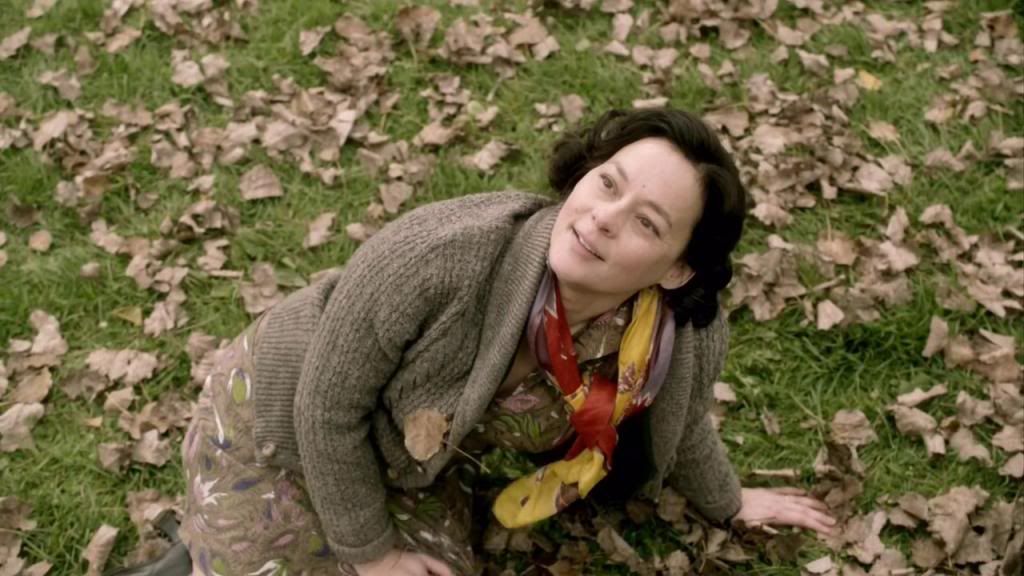
From
Lorna’s perspective, the problem is that Bob has never made any effort
to move on from his traumatic experience, choosing instead to view the
world “through the lens of a few terrible months [he] had twenty-five
years ago.” He seems to prefer to wallow in his pain rather than
acknowledge the things they have accomplished since the war. While he
remained isolated in his pain, she tried to convince him to let her in,
explaining that “[she] asked, [she] hinted, [she] tried, and then
finally, [she] gave up.” She has been trying to re-forge a connection
for decades, and it’s understandable that she would resent him when he
finally makes an attempt to do the same.
Her
relationship with Bob also explains why she is so determined to help
Vera. Faced with the prospect of seeing another person in her life lose
themselves to depression, she fights back. She has to make Vera what Bob
never allowed himself to become: a person who lives after not dying.
Unfortunately,
most of Lorna’s good advice is reserved for other people. Just as she
makes it her job to protect her girls, she also considers it her duty to
protect her country. In the first episode, she begins a campaign to get
a materials controller, Marco Moretti, ousted from Vic Mu based solely
on his Italian heritage and Italy’s connections to Hitler. She accuses
him of being an enemy spy and then spends most of the first three
episodes trying to prove her suspicions. She believes that people who
have done nothing wrong have nothing to hide, and any investigation will
necessarily find them innocent. Implicit in this notion is the idea
that if you are found guilty of something, you must have done it.
Eventually, she reports him to higher military authorities, which leads
to rumours of his being taken to an internment camp. It is only when
she shares an awkward family dinner with Marco and his mother that she
begins to relinquish her fear and comes to appreciate their cultural
differences, as well as the flaws in her worldview.
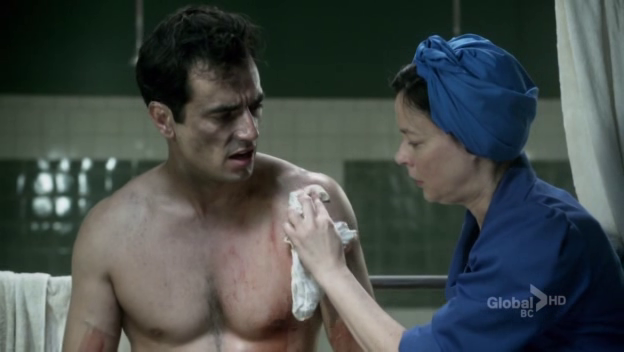
While
Lorna claims that her actions are driven by the circumstances of global
conflict, she proves that, in this case, the political is personal.
Smoking out an enemy spy allows her to feel like she’s helping to
protect her sons; the same rationale motivates her to make the bombs
that will kill other mothers’ sons. When she sees Marco with his mother
in his home, she can no longer pretend not to see him as a person.
Unfortunately, this realization coincides with the discovery of their
mutual attraction. It seems that Lorna’s misuse of her power as a native
Canadian to banish an Italian threat was also an attempt to banish the
temptation that threatens her family and marriage; she had to neutralize
what she viewed as a threat to both her home country and her home. This
is further complicated by the fact that Lorna ends up having sex with
Marco and becoming pregnant with his child, willingly letting him into
her life.
This
all brings us to the issue of sacrifice. When asked to deliver a speech
on Armistice Day, Lorna chooses as her focus the topic of individual
sacrifice on behalf of the greater good. While she explicitly links this
concept to the efforts of soldiers in both wars, she also acknowledges
the sacrifices that she and her fellow workers make to support them.
Implicitly, she also talks about herself. Early in the speech, she
delivers a line that she wrote in an earlier scene; the repetition
suggests that it is intended to draw our focus. As she says, “We are all
asked to make sacrifices, and while not every sacrifice is rewarded, it
is our duty to do so.” It seems as if Lorna is speaking about her
marriage, twenty-five years of living with a distant partner in order to
raise three children, two of whom she has offered to her country. By
the end of the speech, however, she seems to be looking to the future:
“Sometimes, you know when a thing is right. What’s a few small
sacrifices on our part when we stand to win back the happiness and
freedom we deserve?” She sees herself as deserving of love and
affection. She sees herself as deserving of a life that takes into
account her needs.
This
all changes when she learns of the pregnancy in the next episode. After
the positive test comes back, she breaks down in front of Marco, saying
that she’s a horrible person who deserves this punishment for all of
the awful things she’s done. She laments, “I thought it was finally my
turn; I’d get my life. And now it’s over.” She has come to the
conclusion that she’s not the hero, doggedly pursuing the enemy; rather,
she is the villain, paying for her crimes.
Verdict: Actual strong female character
Edith McCallum
Edith
is the least developed and, arguably, the weakest character among the
six that we’ll be discussing. At the factory, she is Lorna’s right-hand
woman, the bridge between her and her girls. In the show, she is the
first victim of the war.
Edith
is at work when she learns that her husband’s plane has been shot down,
and her grief is suddenly made very public. While the show makes clear
that the news could have come to anyone, even going so far as to make it
seem as if one of Lorna’s sons had died, it is ultimately Edith who
collapses with grief. The rest of the season chronicles her attempt to
cope with the loss.
Although
she gets less screen time than other characters, Edith’s story is a
fairly compelling one. She continues to work after receiving the news,
taking comfort in her friends and in the activity. Despite the fact that
she barely sleeps, she knows that she must support her family and
diligently does her job until she is the unfortunate victim of
scapegoating after a disastrous testing day. When Lorna tries to justify
her firing by implying that she could have done better on the test,
Edith defends herself: “Aside from not sleeping a wink since my husband
was blown to bits, or worrying how I’m gonna raise two kids, or how I
still can’t tell them Daddy’s never coming home... Aside from all that, I
can’t imagine what took my head out of the game.” In addition to her
grief, she now has to deal with a reputation for incompetence that will
prevent her from finding further employment.
Once
she gets her job back, she still has to deal with the mess that is her
personal life. The rest of her storyline revolves around her refusal to
tell her children that their father is dead. Although both Lorna and Bob
take issue with her decision, Edith is persistent, trying to protect
her children from the kind of pain that she is experiencing. She causes
herself more pain, however, in pretending that everything is fine.
Helping and hindering her in this pursuit is Bob, who pens letters for
the kids in the guise of Edith’s husband before eventually revealing the
truth. In a refreshing change, the show doesn’t actively support Bob’s
decision to end the charade, but instead has him acknowledge that it was
her right to tell them; he apologizes for taking away her agency.
Edith’s
defining moment comes in the second episode. Vera has asked to brush
Edith’s hair, and in a revealing moment, Edith laments, “I guess the war
pretty much kicked the girly girl out of us, didn’t it?” She is not
just talking about coveralls and turbans, but about the reality that she
faces as a single parent, having to become mother and father and
breadwinner.
Verdict: Supporting role