Showing posts with label miscellaneous mondays. Show all posts

Wednesday, 3 July 2013

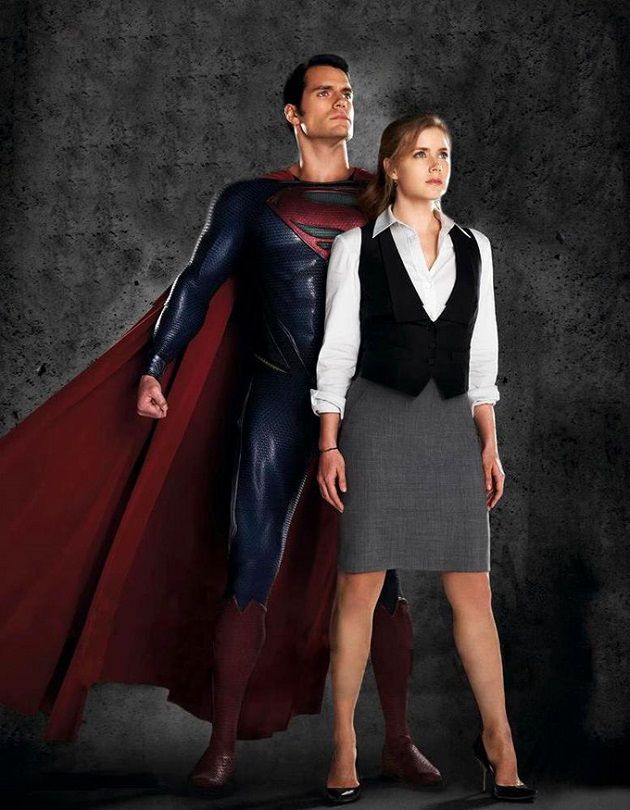
Miscellaneous Mondays: No More Mild-Mannered Alter Egos

It seems a bit disingenuous to give this post the “Miscellaneous Mondays” label, what with it being posted on a Wednesday. However, because I’m not willing to make “Words-I-Should-Already-Have-Posted Wednesdays” a thing, I’m just going to pretend that it’s still Monday. Hey, it almost worked for Texas Republicans.

That brings us to this week’s topic: the recent displays of political badassery by women in the United States. From Supreme Court Justice Ruth Bader Ginsburg, who wrote an epic dissent to what has been called the “evisceration” of the 1965 Voting Rights Act; to Rep. Tammy Duckworth, who soundly schooled a fraud who was gaming the veterans’ disability system; to Texas State Senators Wendy Davis and Leticia Van de Putte and the gallery of women, who filibustered legislation that would gut abortion services across the state, American women have been making a point of speaking up against the politically sanctioned mistreatment of women and minorities.

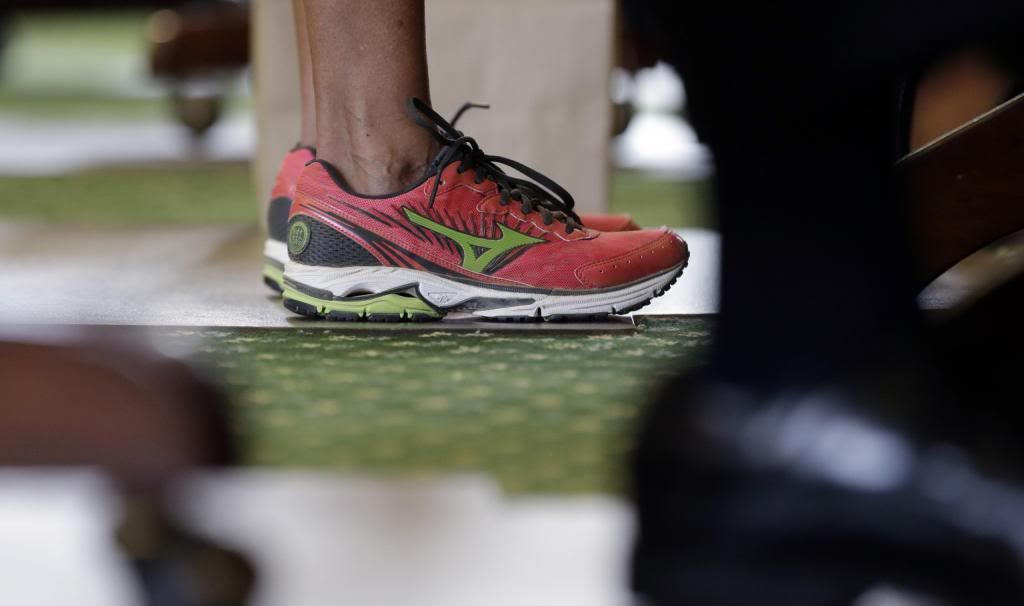
With the exception of the cries for revolution that were voiced across the Internet following the Texas filibuster, my favourite commentary about that event occurred in an exchange between Tumblr users Captainmarvel and Andthenisay. Captainmarvel observes that “170,000 people tuned into the texas senate livestream and hollywood still thinks women can’t carry a superhero film,” to which Andthenisay replies, “i think 170,000 people just watched a superhero film.” Instead of a cape and tights, this hero wears Mizuno Women’s Wave Rider 16 running shoes (“guaranteed to outrun patriarchy on race day”).

Congresswoman Barbara "The Boot" Gordon
I’ve already expressed my thoughts about cinematic superwomen, which essentially echo those expressed by Captainmarvel, but I think that Andthenisay’s comment is important to consider. The livestream figures tell us that people are interested in watching women fight against a patriarchal system that uses the political power of largely straight, white men to revoke the rights that we earned in decades past. While it might be tempting to use this example of real-life heroism to lobby for a Batgirl movie, what I think it shows us is that there might be a market for a film about Congresswoman Barbara Gordon.

It takes one kind of courage to take on criminals in the streets while wearing a mask of anonymity, and a very different kind to confront legislated injustice as a public figure. Instead of yet another square-jawed man defending Earth against a fictional supervillain, I’d like to go to the theatre and see a heroic woman defending women, people of colour, people with disabilities, and LGBTQ people from the very real threats we face from our own governments. Until then, however, we can watch and support Wendy Davis, Leticia Van de Putte, Tammy Duckworth, Ruth Bader Ginsburg, and all the other Women of Steel.

Monday, 24 June 2013

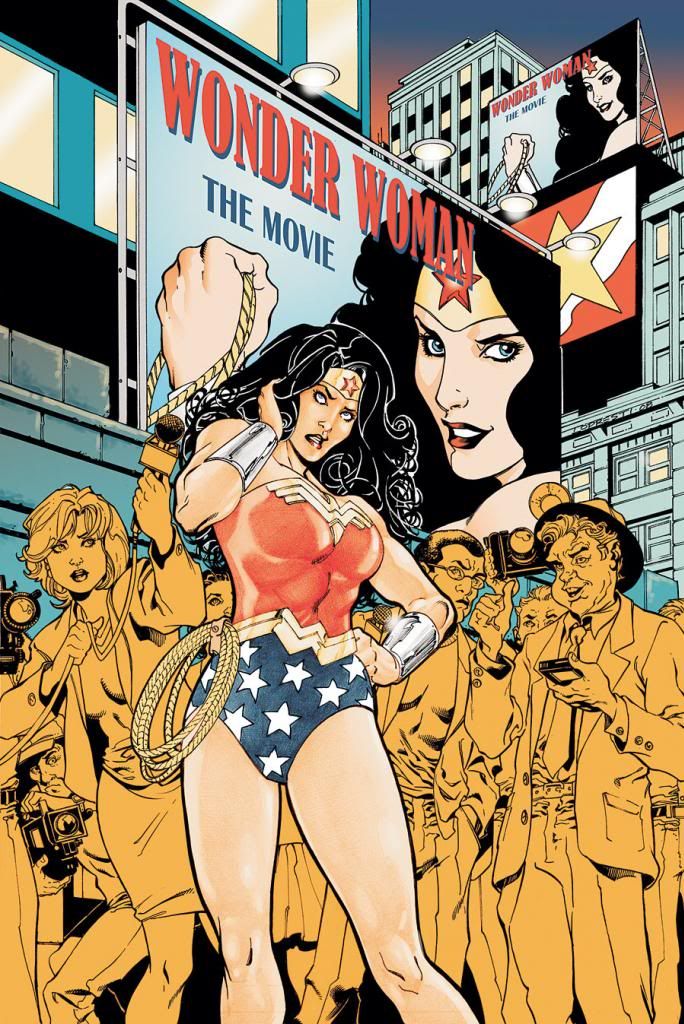
Why We Don’t Need a Wonder Woman Movie (Yet)

Aaron Lopresti and Hi-Fi

(Note: Contains spoilers for Man of Steel and the Dark Knight trilogy.)

Every time a new superhero film comes out, someone will inevitably publish an article asking why a live-action Wonder Woman film has never been made. With the recent release of Man of Steel, this question has again been raised, and this time, some vague answers have actually been given.

For the most part, these answers have been as promising as vague, noncommittal, unofficial assurances can be. David S. Goyer, the screenwriter responsible for Man of Steel and all three of Christopher Nolan’s Batman films, was recently asked about rounding out his portfolio with the third member of DC’s Trinity: “I think Wonder Woman is a very difficult character to crack. More difficult than Superman, who is also more difficult than Batman. Also, a lot of people in Hollywood believe that it’s hard to do a big action movie with a female lead. I happen to disagree with that. But that tends to be the prevailing wisdom. Hopefully that’ll change in the next few years.” A few days ago, The Wrap reported that Warner Bros. is planning to make Wonder Woman the focus of a film following the release of the fabled Justice League movie. There is also further evidence of the studio’s interest in getting a Wonder Woman-focused project off the ground in their repeated attempts to make the character work in a television show. While the 2011 attempt proved disastrous, plans are still in the works to prepare a series for the CW, whose president, Mark Pedowitz, has stated, “We do not want to produce something that doesn’t work for that particular character -- it is the trickiest of all the DC characters to get done.”

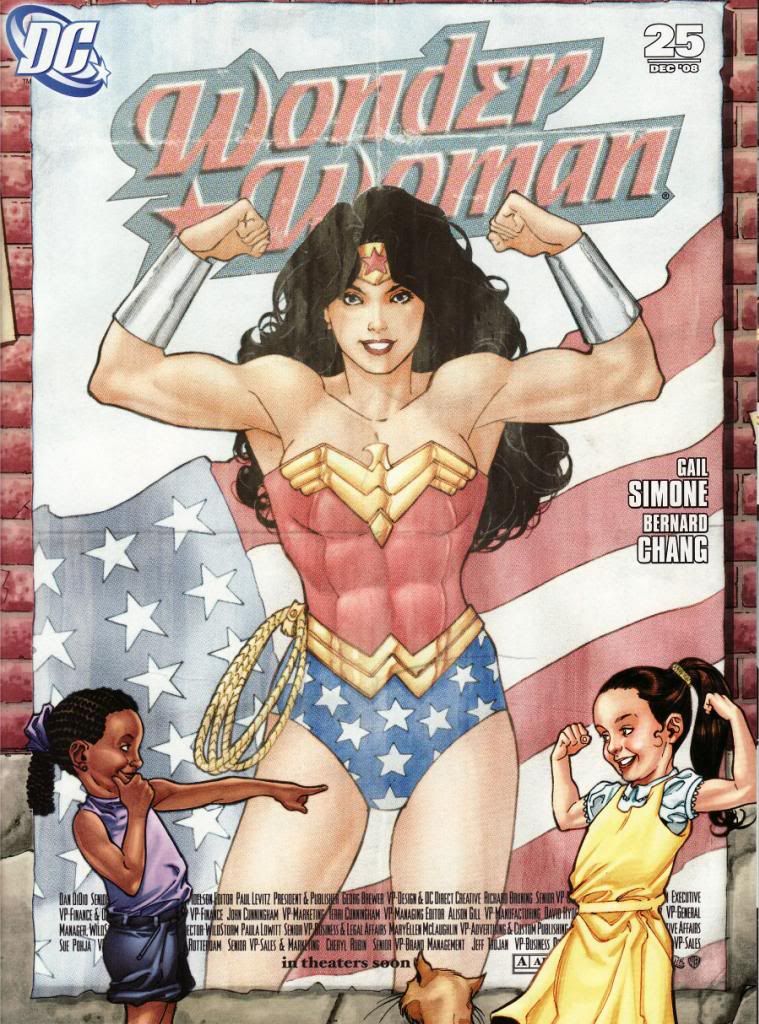
That’s precisely the problem: it’s hard to get Wonder Woman right, particularly when there are hundreds of millions of dollars on the line. My solution? Don’t try.
Aaron Lopresti
This may seem like a shocking assertion to be made by a comics fan who runs a blog all about strong female characters. By all rights, I should be the first person in line for a Wonder Woman film, bracers on my forearms and the double W emblazoned on my chest. And I will be, when the right time comes, but now is not that time. (Neither is 2017, which is the earliest we can hope to see the film released.) In fact, while this may be a good time for Diana of Themyscira to take another crack at television, it is the worst possible time for her to break into the Man’s World that is mainstream Hollywood cinema.

Before you pelt me with fruit and force me to perform my own version of bullets and bracelets, let me explain.

Reason #1: This is not the creative team we are looking for.

Christopher Nolan, the director of the Dark Knight trilogy and producer of Man of Steel, makes dark, overly realistic superhero films with fairly flat, lacklustre female characters. He’s all about the male “lonely god” figure. Wonder Woman, by contrast, is both a complex woman and a character of community.

Zack Snyder, who directed Superman’s latest foray, previously made Watchmen, which suffered from being an almost too accurate adaptation. He made up for that dedication to getting things right by getting Superman all wrong, namely by advocating for Kal-El to murder Zod, despite the fact that this goes against everything that the character stands for. Snyder also wrote and directed Sucker Punch, which is enough reason to keep him far, far away from Diana.

As the writer of all four of the aforementioned Batman and Superman films, David S. Goyer is both clearly not the person we want to write the Wonder Woman movie, and the person who will ultimately get tapped for the job (if it doesn’t go to the writers of the Green Lantern movie that flopped). This is beyond concerning, considering the fact that Goyer said himself that Wonder Woman is more difficult to write than Superman. Keep in mind that Goyer gave us a Superman who snaps his enemies’ necks, willingly fights said enemies in densely populated areas with no concern for the humans he purports to want to save, and, perhaps worst of all, doesn’t engage in witty, sarcastic banter with Lois Lane (who knows his identity almost from the outset). It was bad enough when Goyer and Nolan ignored decades of sidekicks to make Batman the hero who works alone, but completely disregarding fundamental aspects of Superman’s character is unforgivable.

If this is what they do to Superman, imagine what they would do to Wonder Woman, who snapped a man’s neck in the same issue where she was punched from outer space to Earth, and prayed not for her own safety, but for a landing that caused no human casualties. The complexities of her character would be lost on a creative team that fails to grasp even the basics of the Big Blue Boy Scout.

Reason #2: A failure will put female superhero films on hold for years, if not decades.

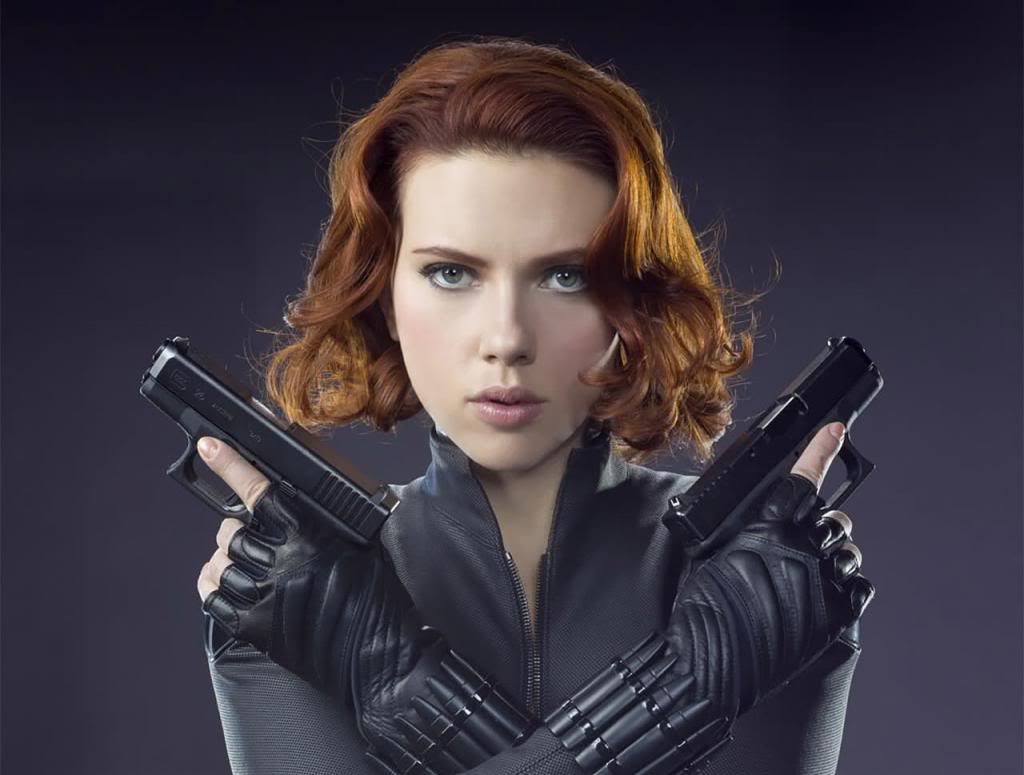
If you go to a multiplex this summer, you will see ample evidence that Hollywood doesn’t need an excuse not to make a film about women. Consider the fact that, following the release of The Avengers and the near universal praise of the Black Widow character, Marvel and Disney decided to make sequels to all of their male superhero franchises, as well as a Guardians of the Galaxy film, instead of going with the more obvious choice of What Happened in Budapest Or, Why Natasha Romanoff is More Compelling Than Yet Another White Dude. Because of a (very short) string of terrible woman-led superhero movies, including Catwoman and Elektra (nine and ten percent on Rotten Tomatoes, respectively), we need an unqualified hit to show that superheroic women can sell tickets, and a stand-out in an ensemble film apparently isn’t enough.

What complicates the situation further is the fact that Wonder Woman is the female superhero. When you ask a person who doesn’t read comics to name a woman superhero, Diana’s is likely the first name that will come up. She’s just about the only woman familiar to the masses whose alter ego isn’t a riff on a previously established male hero. She’s the one woman who has to be on the Justice League roster for the general audience to consider it complete. Because of this, she is also the greatest risk.

If a poorly made film featuring a minor female superhero is a box office flop, Hollywood executives will claim that audiences don’t want to see women donning capes and tights and fighting crime. We will know better, and dozens of articles will be written explaining the real reasons behind the failure. Eventually, someone might try again. However, if a Wonder Woman movie fails, especially one made by the current “dream team,” executives will have a more legitimate reason to shy away from super-powered ladies. If even the biggest name can’t draw in the crowds, why try?

It’s not terribly sound logic, but it’s the logic that will likely be applied.

Solution

I had initially planned to provide more reasons, but it really does boil down to those two: a failure to do Wonder Woman well would have disastrous results, and the creative team most likely to be assigned the job seems to lack the capacity to do the character well.

Kano and Stefano Gaudiano
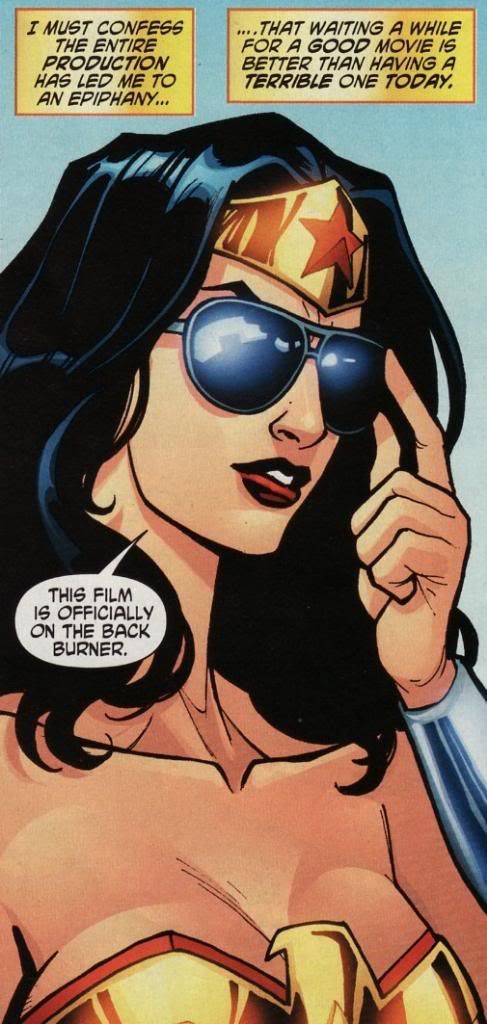
This brings me to my proposed solution: DC/Warner Bros. and Marvel/Disney should make a bunch of superhero movies starring women, using creative teams that know, love, and understand the characters. If the studios are concerned that they won’t make enough money, they should make the first few films with smaller budgets and let the audience prove that they are willing to pay. In the age of Kickstarter and the Facebook campaign to get people to see Bridesmaids, we are well aware that our dollars act as votes in favour of the production of similar content. If enough of us pay to see movies about female superheroes and let executives know that we saw those movies specifically for those women, we make making those films worth their while.

I also think that the studios should capitalize on the franchises they already have, not by adding sequels starring Yet Another Straight White Guy, but by fleshing out the universe. Marvel has already grasped this idea, and DC should follow their lead. Christopher Nolan is done with Batman, but that doesn’t mean that his Gotham can’t be used to tell the stories of people like Helena Bertinelli or Cass Cain. The presence of an already established Commissioner Gordon gives Warner Bros. the opportunity to create two new franchises: Batgirl and Gotham Central.

Although The Dark Knight suggests that Gordon’s son was more profoundly affected by the family’s encounter with Batman, it wouldn’t take much to show how the same event influenced his daughter, Barbara, the Gordon offspring we already know and love. In a film trilogy, we could follow her from the beginning of her career as Batgirl, through the shooting that left her partially paralyzed, and finish with the establishment of the Birds of Prey.

Like Agents of S.H.I.E.L.D., Gotham Central would be a television spin-off of a successful franchise. The series could take place just after the events of The Dark Knight Rises, when Batman’s sudden absence drives the GCPD to shift the Major Crime Unit’s focus exclusively to the criminal activities of the Caped Crusader’s rogues gallery. We would see Robin finding his footing from the perspective of the officers who knew his predecessor, and we would watch Renee Montoya’s development from a police officer to a superhero over the course of the show.
Bernard Chang
My last suggestion is to tell diverse stories in order to attract diverse audiences. An indie-style film about Batwoman -- a gay, Jewish former West Point cadet kicked out under DADT -- would sell very well, and it wouldn’t require the entire population of the United States to see it to make money. The Marvel comic, Runaways, featuring a teenaged cast full of racial and sexual diversity -- not to mention four girls in its original line-up -- was on its way to being made a few years ago, and it’s time for it to get the Hollywood treatment (sans the usual whitewashing and fetishization of queerness). A white, male, cisgender, heterosexual hero may have a whole host of abilities, but he doesn’t have the power to satisfy every kind of viewer.

So, no, I don’t think we need a Wonder Woman movie yet. I think that we need to prove to the Hollywood money-making machine that people want to see women saving the world while wearing slightly ridiculous outfits. I think we need to show every naysayer that women are capable of being more than love interests who play second fiddle to their saviour boyfriends. And then, when we have proven that women are every bit as heroic as men, that’s when we make Wonder Woman, because that’s when we’ll be ready to tell her story right.
Tuesday, 18 June 2013

Miscellaneous Mondays: In a World... Where Monday Posts Go Up on Tuesdays...

I’d like to offer my apologies for posting this Monday update in the wee hours of Tuesday morning; I was distracted first by a powerful need to see Man of Steel, and then by an equally powerful need to figure out everything that was wrong with Man of Steel. (More on that next week.)

However, while that cinematic experience ultimately disappointed, I did discover a film potentially worth watching this week. It would be more accurate to say that my sister discovered it, as she not only found the trailer, but forced me to watch it by nudging me via text every few minutes. It is thanks to her that I’m now telling you to schedule some time to go to a movie theatre in August.


In a World... tells the story of a group of fierce, mutated, female Amazonian warriors battling prehistoric cavemen hybrids in a scenario based on the Prussian War. Well, sort of. At least for a few minutes. And I’m sure those minutes will be awesome. The rest of the time, however, it tells the story of the woman booked to do the voice-over for the trailer of that film and her struggle to break into the male-dominated field of movie trailer narration.

Lake Bell, the writer, director, and star of the film, has said that she wanted to explore the reason for the exclusion of women from the trailer voice-over field: “The male voice is just deemed, ‘the omniscient voice,’ whether it’s because we coin God as a He, and it could [be] that sort of culturally significant, or it’s just literally the resonance … [is] easier and more authoritative to hear. Which both are interesting conversations, and ones that I wanted to explore in the movie.”

As a person who wants to hear women’s voices telling me what ridiculous hijinks I can look forward to seeing in the next Hollywood blockbuster, and as someone who spent far too much time during my childhood affecting a terrible Russian accent, I will definitely be checking out In a World..., and I hope you do too.

Monday, 10 June 2013

Miscellaneous Mondays: The Clone Wars

On June 1st, the BBC announced that Matt Smith would be leaving Doctor Who, paving the way for another actor to don the bow tie (or another ostensibly “cool” accessory). Immediately, suggestions began pouring in, and many of them called for the Beeb to take this opportunity to make some real changes. The show has been deservedly criticized for its sexism and racism, and a number of disenchanted fans want to see the white, male Doctor regenerate into a woman, a person of colour, or both. (My vote is for Lenora Crichlow.) WhatCulture! even posted a half decent, half gimmicky list of women who could play the part.

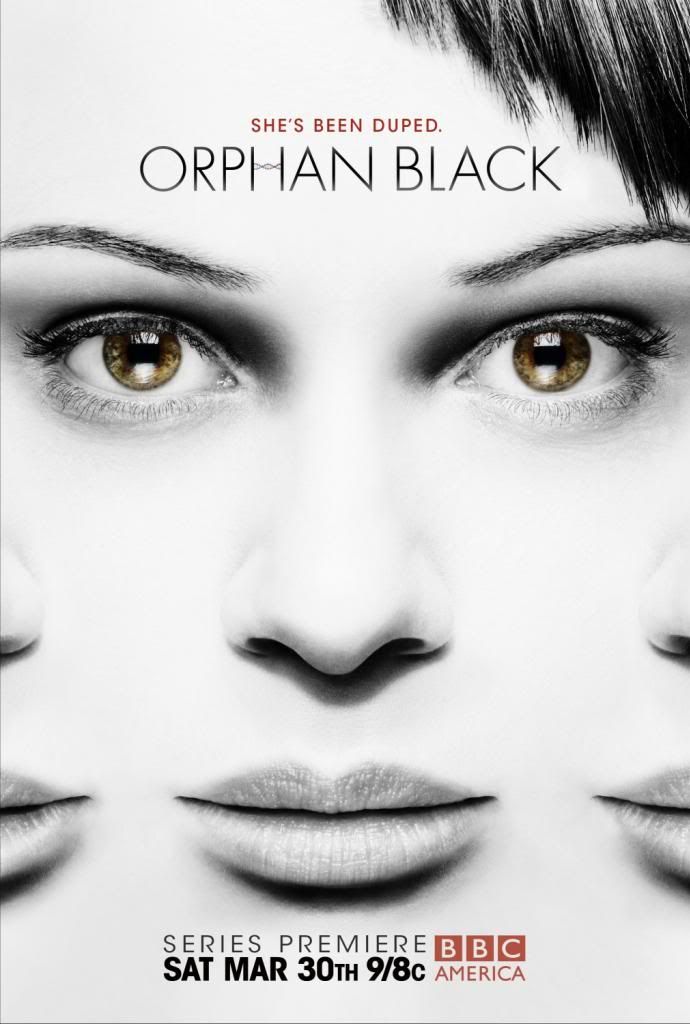
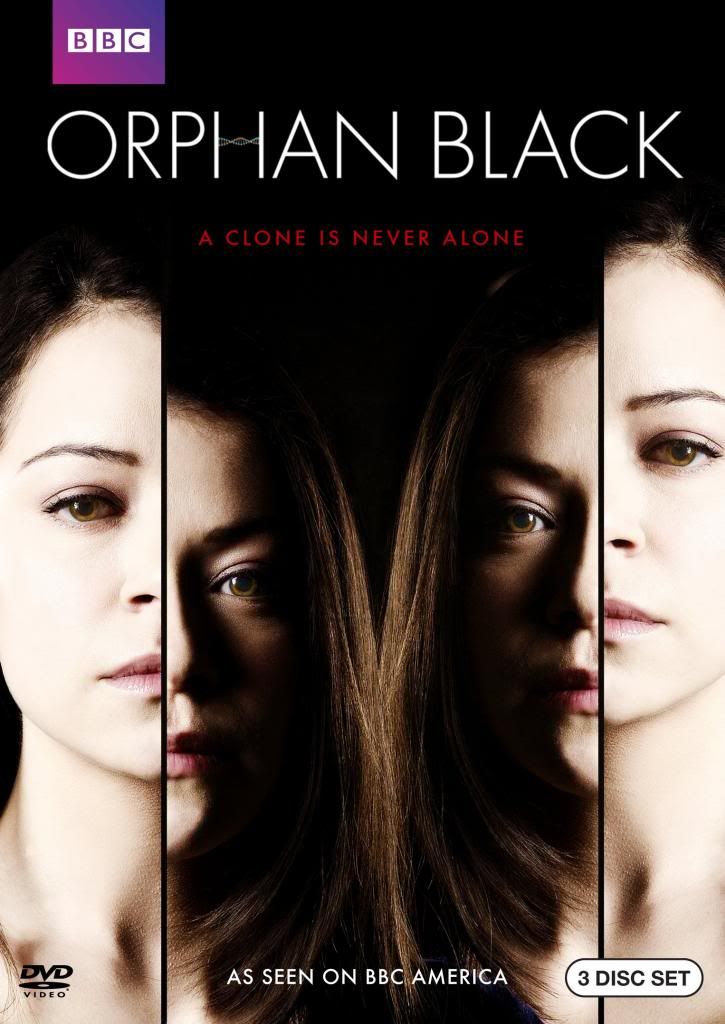
The best suggestion, however, came from Tumblr user Spiffymuffin, who joked that Tatiana Maslany should play the twelfth Doctor... and the companion... and the aliens... and the audience. Maslany, who plays multiple roles on the BBC America/Space joint production, Orphan Black, has become the subject of a meme the likes of which the Internet hasn’t seen since we learned the facts about Chuck Norris. Where once we asserted that “Chuck Norris doesn’t sleep. He waits,” now we claim that, while “factory workers worry about being replaced by machines, actors worry about being replaced by Tatiana Maslany.” However, the show is worth watching for so much more than Maslany’s masterful performance(s).

Orphan Black tells the story of Sarah Manning, a small-time criminal who steals the identity of a woman whose suicide she witnessed. Because the recently deceased Beth Childs looks just like her, Sarah slips into her life nearly undetected, only to find herself having to deal with the problems Beth killed herself to escape. As if that weren’t enough, Sarah quickly learns that there is a reason why she and Beth are identical: they, and at least seven other women, are clones.

It’s not difficult to see why Doctor Who fans who are tired of the show’s sexist shenanigans would want to borrow a little of Orphan Black’s feminist magic. While the first episode is a bit dude-heavy, the introduction of a whole host of clones, as well as several other women not played by Tatiana Maslany, quickly turns the show into an oasis of complex female characterization. In an interview about the show, Maslany points to the quality of the women’s roles as what drew her to the project:
The wonderful thing about this show is that each of the clones has their own voice. They’re not just cannon fodder. They’re not just expendable. They’re completely their own human being. And so, for me, I was salivating at the challenge to get to play all these characters and define each of these women because each of them are so well written. You could have a series about each of them. They’re so complex and human and funny and dark.
While other shows struggle to represent even one or two women as complex, flawed human beings, Orphan Black makes the complexity, the flaws, and the humanity of its female characters the focus of the show.

There’s a lot more to say about the show’s portrayal of women and women’s issues, but, as one poorly written female character on Doctor Who would say, “Spoilers.” What I will say, however, is that Orphan Black is well worth your time. Even if Tatiana Maslany can’t play every character on every show, it would be wonderful to see Orphan Black’s approach to female characters replicated across both individual shows and entire networks.

Monday, 3 June 2013

Miscellaneous Mondays: Tropes vs. Women in Video Games


Back in January, we recommended that you check out Anita Sarkeesian’s Feminist Frequency series on YouTube, specifically her analysis of the gender segregation of LEGO’s marketing. Today, we’re suggesting that you pay her channel another visit, in order to see the first two installments of her highly anticipated (and hotly debated) critique of sexist tropes in video games. Whether or not you entirely agree with Sarkeesian’s points, the videos make for interesting viewing and serve as excellent starting points for discussion (such as this commentary on the absence of women of colour in the damsel in distress role). Finally, if you’re wondering who Anita Sarkeesian is or why these videos are such a big deal, feel free to do a Google search, but prepare yourself to lose a significant amount of your faith in humanity.

Monday, 27 May 2013

Miscellaneous Mondays: The Geena Davis Institute on Gender in Media


If you’re anything like me, you’ve probably had more than your fair share of arguments with people who refuse to see the blatant inequality of gender representation in mainstream media. These are the people who think that everything’s fine because “Black Widow was the best part of The Avengers” and “The Hunger Games made a ton of money.” “I mean, come on, even Pixar made a girl movie; isn’t that enough?” And let’s not forget that old favourite: “It’s only a movie. Lighten up.”

Now, thanks to the Geena Davis Institute on Gender in Media (and, in the video above, Geena Davis herself), you can fight back with the power of facts. The institute’s website provides data on women’s involvement both in front of and behind the camera, linking the often disappointing quantity and quality of female characters to the dearth of women writers and directors. They pay particular attention to children’s media and the insidious messages that people internalize during their formative years. The studies make for fascinating reading, even if you don’t intend to memorize some of the more disturbing figures for use in verbal smackdowns.

Monday, 6 May 2013

Miscellaneous Mondays: I Am a Princess


Bask in the glory of what the Disney Princess brand could be if the diversity of their heroines matched the diversity of their audience. Then weep because it may be decades before we see queer princesses, princesses with disabilities, princesses with a wide range of body types, or, at this rate, more princesses of colour. Finally, watch the video again to lift your spirits. Repeat as necessary.

Monday, 29 April 2013

Miscellaneous Mondays: Outrage


This week’s Miscellaneous Mondays post is a guest contribution from my sister, Erin.

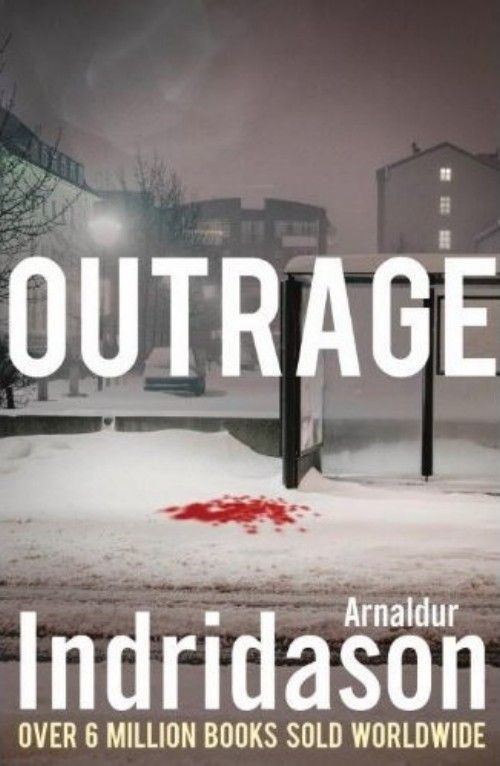
I have been working my way through Arnaldur Indriðason's Icelandic murder procedural series, albeit slowly and out of order. The books that I have read, however, are fantastic. The stories are gripping and realistic and practically glue the book to my hand until it's over, at which point I both mope because it's over (a feeling I'm sure you all know too well) and become incredibly paranoid about crime.

They typically focus on a male protagonist, Erlender, who works without a partner and lives a solitary life, and the only women mentioned are supporting characters with little page-time in his narrative. While women are not always positively depicted through his eyes, they are, at the very least, authentic.

You may be wondering why such a series would be recommended on Strong Female Character. When Erlender takes a leave of absence for personal reasons, the series shifts to follow his female co-worker, Elinborg, in at least one novel, entitled Outrage. It gives us a glimpse into the personal life and complex personality of an otherwise minor character. She is a grounded and composed woman and mother who more than holds her own in a male-dominated career field while balancing the trials of her family life and her work. Persuasive and methodical, with outstanding detective skills and a need to get to the bottom of the case, Elinborg is an authentic portrayal of a modern woman in an increasingly demanding world.

I suggest reading through the entire series because each case is enthralling, and every character is well thought-out and, even when only making brief appearances, portrayed with their own foibles, struggles and motives. However, Outrage is a particularly interesting representation of an Actual Strong Female Character, Detective Elinborg.

Monday, 22 April 2013

Miscellaneous Mondays: Happy 75th, Lois!

 As a fan of strong female characters, there are some women you know you should know. Just as an English major knows that they’re going to have to have a working knowledge of every book that Wishbone covered, the fan of awesome ladies knows that they must familiarize themselves with people like Princess Leia, Sarah Connor, and Ellen Ripley. It’s about respecting the classics, and no one is more classic than the characters who come to us from the Golden Age of comics.

So it’s with great trepidation that I admit to you that I don’t really know much about Lois Lane. I’ve seen the atrocious Superman Returns and read the fantastic New Frontier, but, as a fan of the Gotham side of the DCU, I’m woefully unversed in the history of a woman primarily known for being Superman’s girlfriend.

In my defense, seventy-five years is an awful lot of history to get through. Seventy-five years ago last week, Lois Lane made her first appearance alongside the Man of Steel in Action Comics #1 and, while the majority of the comics-loving corner of the Internet is celebrating his anniversary, blogs like DC Women Kicking Ass are paying tribute to the intrepid reporter who’s been with him through it all (setting aside those brief periods when she was dead).

This week’s recommended reading is one such tribute. Sue of DCWKA conducted a series of interviews with several creators and a historian who have written about Lois, and they serve as a perfect introduction to the character and her place within comics culture. If, like me, you’re using the release of the upcoming Man of Steel as an excuse to learn all about Lois, this may be the perfect place to start.

Monday, 15 April 2013

Miscellaneous Mondays: (Don't) Just Shut Up

“As an educated consumer, as a self-described fervent feminist, as someone who makes it a point to look for and see these things about the media I engage with, I still want to watch this happen. I still want what the narrative tells me to want. I do it despite myself, but I do it all the same.”

So says Gyzym in
this stunning takedown of rape culture in popular media. In this post, she talks about the necessary acquisition of that most difficult life skill: being able to identify and condemn the harmful, problematic aspects of the media you love.

We touched a bit on this in our Disney Princess posts, when we included disclaimers to the effect that we would endeavour to be objective about certain characters, but could make no guarantee of success. Before I discovered Batgirl and the Pink Ranger, Belle was my idol, and I thought that our shared hair colour and love of reading bound us together with ties stronger than kinship (and the unfortunate reality of her being a fictional character). This, combined with a tight focus in those early posts on the characters and little exploration of the social environments of their worlds, led to an unnecessarily superficial reading of Beauty and the Beast. While we stand by our assessment of Belle as the first princess with real agency, we also acknowledge that other characters -- Gaston and the Beast -- spend most of their time trying (with a fair amount of success) to curtail it. Our original analysis had some holes; luckily, people like Gyzym exist to fill in the gaps and remind us to dig a little deeper.

Her goal isn’t merely to identify issues with beloved cultural works, but to tell us why we all have to learn to think more critically about the media we consume. Speaking about the dearth of mainstream discussion about enjoying problematic media while acknowledging its issues, she reminds us that it is our responsibility to teach ourselves and others to cultivate this critical faculty. As she says, “nobody told me because nobody knew to tell me. Nobody told me because nobody told them.”
Harmful attitudes that we refuse to speak about just go on to be silently excused and perpetuated.

Monday, 8 April 2013

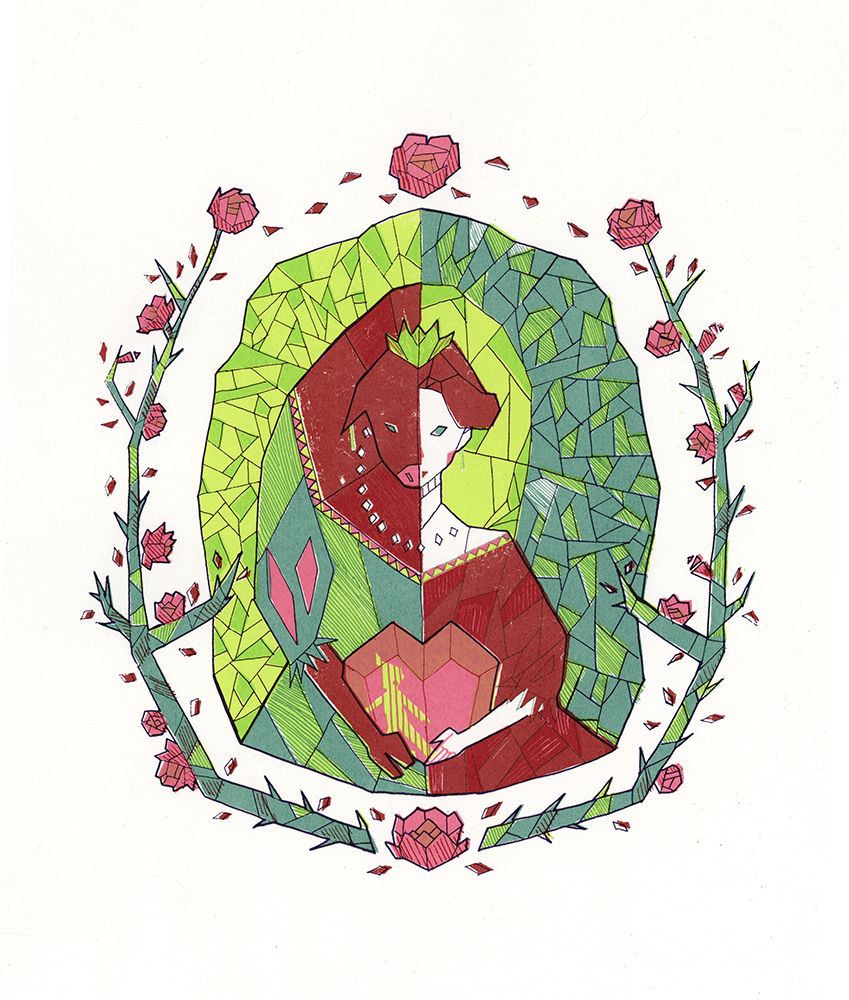
Miscellaneous Mondays: Gender-Reversed Fairy Tales and Classics

Yudi Chen


This post is going to be very short, because, while a picture is usually worth a thousand words, these ones could be entire novels.

Gender-reversed versions of iconic fairy tales? Yes, please. I have waited my whole life for this version of Beauty and the Beast.

Monday, 1 April 2013

Miscellaneous Mondays: ... For Girls!

It’s that time of year again: April Fool’s Day, a day dedicated to practical jokes and pranks. To commemorate the occasion, we here at SFC are going to talk about a trend that, well, we wish was a joke: taking what was once a gender neutral toy and making it “for girls!” We’ve talked about gender-segregated marketing before. It’s by no means a new trend in toy production and advertising, but it seems that in the past year there’s been a rise in targeted spin-offs of toys that were once considered largely gender neutral.

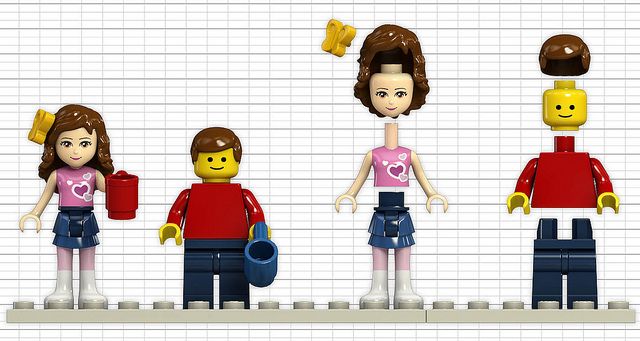
Our first case in point is Lego’s new line, Lego Friends, a renewed attempt by the company to create a line of toys marketed exclusively to girls. Like many girls’ toys before them, the new Lego Friends sets have been injected with pink and purple, and feature stereotypically “girly” environments such as a beauty salon, a bakery, and a pool (a saving grace and advancement on earlier gendered offerings is that there’s also karate class, soccer practice, and inventor’s workshop sets. They’re still pink, though). And it seems Lego is profiting enormously from this “pinkification": Lego’s overall sales rose 25% last year, and sales of Lego Friends sets were three times higher than originally expected.

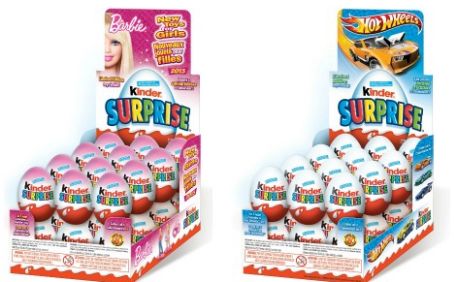
With Lego Friends being met with such financial success, it’s hardly a surprise that Kinder Surprise has also jumped onto the “for girls!” bandwagon. Kinder, which once packaged refreshingly gender-neutral puzzles, Smurf figurines, and put-together toys in a chocolaty shell, has decided that they too need to cash in by dividing their offerings. Last summer, the company started rolling out Kinder Surprise eggs wrapped in pink packaging, containing Barbie and Winx Club figurines. A split from the original line (which has tellingly not been labelled "for boys!" even if that is now implied), the girls' line is everything you'd expect from the kind of marketing team that thinks that girls couldn't possibly enjoy building something that isn't wearing a dress. There’s no word yet on how successful this new line is, but we suspect that, like Lego Friends, they’ll sell like delicious, stereotypical hotcakes.

The reason we wish that the development and success of these new ultra-pink toys was a joke? As Pinkstinks puts it, “girls’ products overwhelmingly focus on being pretty, passive and obsessed with shopping, fashion and makeup - this promotes a dangerously narrow definition of what it means to be a girl.” There are a multitude of ways to be a girl; traditionally feminine and masculine values are not mutually exclusive. A girl can be a race car driver if she wants, just as a boy can be a stylist, and vice versa. Children are often told that they can be anything they wish, but when toys limit a child's imaginative play to a few standard scenarios, is it any wonder that these wishes are limited accordingly?

We just wish that Lego and Kinder, ostensibly two of the more imaginative toy creators in the business, would have thought of that before gendering their once universal toys.

Monday, 25 March 2013

Miscellaneous Mondays: ECCC Round-up Part 3

If you’re still on the fence about buying access to the Emerald City Comicon footage, here’s a small snippet from a panel with Felicia Day and Wil Wheaton, the “Geek & Sundry Panel of Awesome”.

Audience Question: As a female in a largely male-dominated genre, how do you maintain your femininity and keep the girly thing going?

Felicia Day: I just do whatever the hell I want.

Wil Wheaton: Yeah! Bravo.

Felicia Day: A lot of people want to make girl gamers or girl geeks a controversy. A lot of people are trying to make it their identity. I respect everybody. I’m just myself. I am a girl who loves what I love. I don’t know a lot about some things, like I don’t know deep lore about Star Wars; that doesn’t not make me a gamer or a geek. If I don’t know how to play Call of Duty, great; I’ll kick your ass at Skyrim. I do whatever I want. If I dress sexy, it’s ‘cause I feel like it, not for somebody else. It’s all just me being me, and it’s incidentally I’m a girl. I love ordering shoes. These are pretty good; I got them off a set, but generally... I just like the things I like and I represent myself, and a lot of those things happen to be “geek genre” things, but I’m not one thing, and nobody is just one thing. And to allow yourself to be pigeon-holed defeats all of us, ‘cause then we’re just a label and a mash-up T-shirt, and we’re all more than that.

Wil Wheaton: If you’re one of those people that makes that question need to be asked, fuck you.

Monday, 18 March 2013

Miscellaneous Mondays: ECCC Round-up Part 2

“This year, the geek community’s strained relationship with diversity came to a head. Conflicts over exclusion, identity politics, and what makes a “real” geek have exploded into the mainstream media. Creators, curators, community leaders, and critics on the front lines examine the fight over geek identity and barriers to diversity in geek communities and media; and propose concrete steps toward a diverse and inclusive geek culture. Join industry leaders Rachel Edidin, David Brothers, Andy Khouri, Regina Buenaobra, Sarah Kuhn, Cheryl Lynn Eaton, and Kate Welch, as they discuss this hot-button issue.”

This is the description for the ECCC 2013 panel, “Looking Past the Target Audience.” I was there. It was awesome. It was not recorded and streamed for the at-home viewer. I was not amused.

However, I was prepared, so I can share with you a transcript of that discussion, as well as a link to the Tumblr where the panel will continue.

I love that ECCC is giving these kinds of events the opportunity to exist. I love that they booked hours of time for a film festival featuring short films made by women (that never happened, although that was in no way ECCC’s fault), not because it would be popular (based on the size of the group gathered, it decidedly wasn’t), but because such an event should be part of Comicon. I love that “From Victim to Hero” is available for me to view again and again. I do not love the fact that “Looking Past the Target Audience,” an important conversation that needs to be had at a pivotal time in comics history, is relegated to a Tumblr askbox.

Monday, 11 March 2013

Miscellaneous Mondays: ECCC Round-up Part 1

After four years of attending the same comic convention, even one that is growing as quickly as ECCC, you have a pretty good idea of what to expect on the show floor. There’s the artist alley, the clothing retailers, the publishers’ booths, the creators’ tables, and the specialty stores. Because the convention organizers regularly update their site with news of special guests and displays, you may know for months in advance whose panel you’re going to attend. There aren’t many surprises.

That’s why my favourite part of the build-up to ECCC is the release of the programming schedule: it’s where you encounter the unexpected. I knew I would find things like Sir Patrick Stewart’s panel closing out the con (and knew, too, that I would be willing to weather the mass exodus afterwards because, come on, it’s Jean-Luc Picard). I did not know that I would find a two-night film festival featuring short films made by women. (I also did not know that finding such a thing in the program did not necessarily mean that I would find it at the convention, but more on that in the next Monday post...) I didn’t know that I would find two panels perfectly tailored to the interests of this blog, but there they were.

The first of these panels was one focusing on the progression of characters, both male and female, “from victim to hero.” As you can imagine, the majority of the time was spent discussing the “rape as backstory” trope, but the panelists brought up some interesting points. The four panelists -- Scott Allie, Editor in Chief of Dark Horse Comics, Mike Oeming, the artist of Powers, Kelly Sue DeConnick, the writer of Captain Marvel, and Christos Gage, a writer for Marvel who has also written for Law & Order: SVU -- all argued against the use of sexual assault as the sole means to build a female character. Oeming summarized the ‘80s and ‘90s use of rape in comics as “a catalyst to unleash mayhem and violence and craziness and stuff.” It was not about a woman coping with the physical and psychological effects of sexual assault, but about finding a way to set them off on a rampage.

The panel further discusses topics such as the treatment of the sexual assault of male characters and the differences between writing a female character as a woman and writing her as merely “a dude who just happens to have breasts.”

While I would strongly recommend that you shell out the fifteen bucks to get access to this panel (and tons of other worthwhile videos), I would also like to share with you two of my highlights, of the panel and of the convention, both provided by Kelly Sue DeConnick. When the panel discussion turned to the question of whether sexual assault is a lazy writing tool, DeConnick offered this response: “I would not be sad if we were to call a moratorium on rape, at least in superhero comics, for a few years, just to see if we could do it, you know?”

Her other comment is basically perfection and, while I’m glad that the last part of it is making the rounds on Tumblr, I think it needs to be appreciated in all its glory. Speaking about the proper way to write female characters, Kelly Sue DeConnick said this:

“I don’t require that your female characters be upstanding individuals; I’m kind of a bitch. I am wildly imperfect. I don’t require that all of the female characters that people write be role models -- I don’t want them to be. What I do require is that you allow them to be the protagonists in their own stories, and when you include women in your other books -- magically, just like men -- they need to be there as individuals with agency, with their own motivations and their own desires and their own lives. [She goes on to explain the Bechdel Test.] The Bechdel Test has plusses and minuses, like basically, for me, it boils down to what I call the “Sexy Lamp Test,” which is if I can take your female character out and put a sexy lamp in their place, you’re a fucking hack.”
Best moment of the entire convention? I think so.